


Every Chartered Accountant has faced this situation. A client calls with a complex issue, expects a quick answer, and the matter involves multiple sections, timelines, and interpretational risks. Preparing an advisory note in such cases is not just about writing. It requires deep research, structuring, and careful positioning of the answer.
In today’s environment, where tax laws are evolving rapidly, relying only on manual research slows down advisory delivery. This is where AI is becoming a practical tool—not to replace professionals, but to assist them in preparing faster, structured, and well-reasoned advisory notes.
Why Advisory Drafting Is Still a Bottleneck
Even experienced professionals spend significant time in:
- Identifying the correct provision,
- Checking amendments and timelines,
- Reviewing procedural requirements, and
- Structuring the final advice.
For example, issues involving charitable trusts under Section 12A and procedural compliance like Form 10AB are not just technical but also time-sensitive. Missing a deadline can completely change the advisory outcome.
This is exactly where AI can reduce the initial workload and help professionals focus on judgment rather than data gathering.
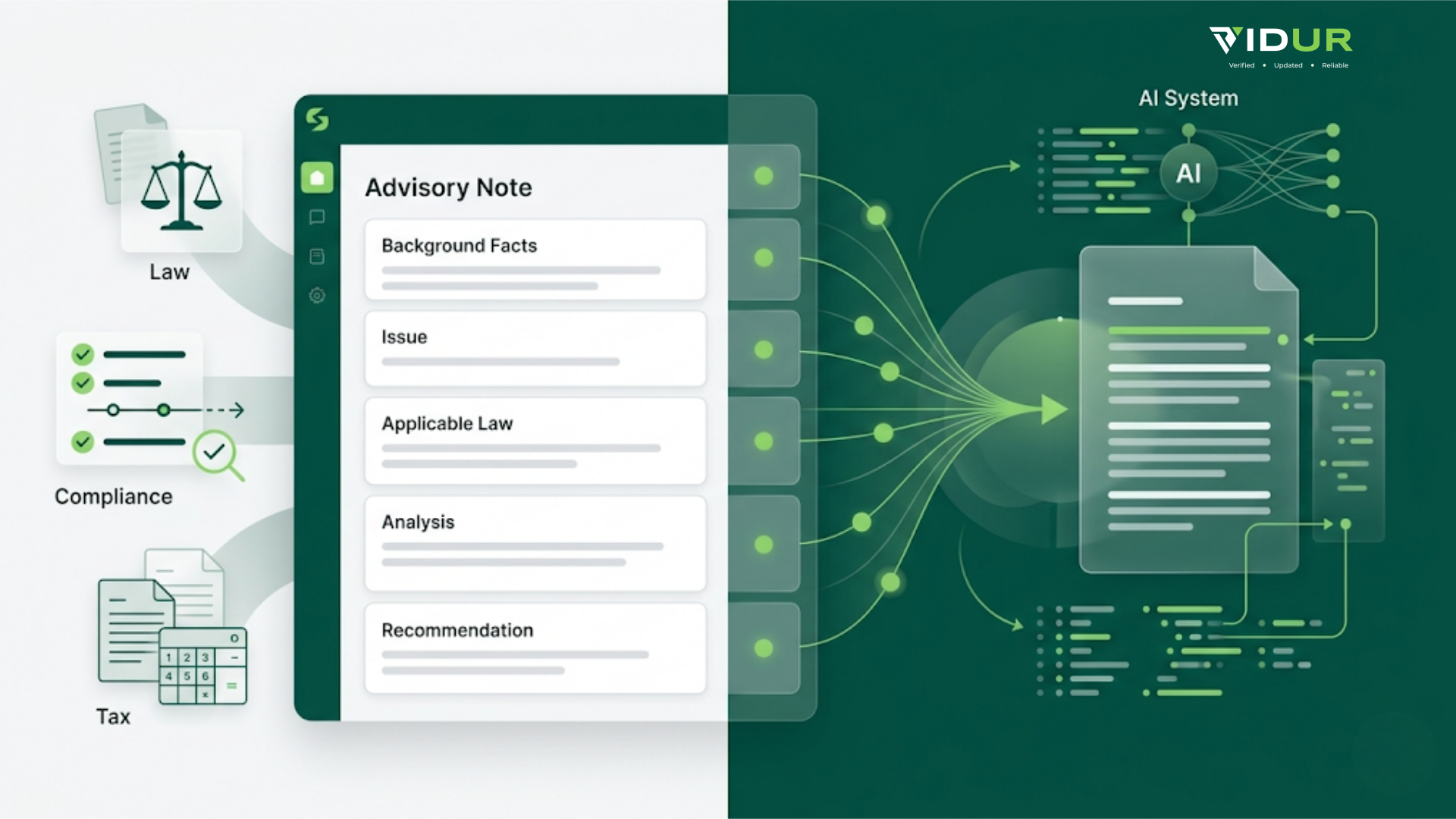
A Practical Workflow to Prepare Advisory Notes Using AI
Step 1: Define the Client Issue Clearly
The quality of the advisory depends on how clearly the issue is framed.
Instead of vague queries, define:
- Relevant section (e.g., Section 12A),
- Specific event (delay in filing Form 10AB),
- Timeline (beyond extended limit and 6 months), and
- Objective (whether to appeal before ITAT is advisable).
Clear inputs lead to structured and relevant outputs.
Step 2: Use AI for Legal Research and Position Building
AI tools can quickly:
- Identify applicable provisions
- Highlight procedural requirements
- Surface interpretational issues
- Provide possible legal positions
This significantly reduces the time spent on initial research.
Step 3: Convert Research into Advisory Structure
A professional advisory note typically includes:
- Background facts
- Issue for consideration
- Applicable provisions
- Analysis
- Practical risk
- Recommendation
AI can help draft this structure quickly, allowing the professional to refine rather than build from scratch.
Step 4: Refine Language for Client Clarity
Clients do not want sections alone. They want clarity on:
- What went wrong
- What can be done now
- What risk exists
AI helps simplify technical explanations into practical advice without losing legal depth.
Real Example: Advisory on Delay in Form 10AB Filing
Let us look at a real user query handled through VIDUR AI:
User Query:
Is it advisable to file an appeal before ITAT in case where there is a delay in filing an application under Form 10AB for permanent registration under Section 12A beyond extended limit and beyond 6 months from the date of commencement of activities?
This is a classic advisory scenario involving:
- Procedural non-compliance
- Limitation period
- Interpretation of condonation provisions
- Litigation strategy
Using VIDUR AI, the response (see full answer here: https://ai.vidur.in/share/cvDdqqxBWXLJ5QztsdYa) provides a structured analysis covering:
- Applicability of Section 12A and related procedural requirements
- Impact of delay beyond statutory and extended timelines
- Possibility of condonation and legal remedies
- Practical position on filing an appeal before ITAT
What Makes This Advisory Valuable
Instead of a generic yes/no answer, the AI-generated response:
- Breaks down the legal position clearly
- Highlights procedural limitations
- Identifies litigation viability
- Provides a reasoned recommendation
For a CA, this means:
- Faster first draft
- Better structured advisory
- Reduced research time
- Higher confidence in response
This is exactly how AI should be used in advisory—not as a shortcut, but as a structured assistant.
Where Professionals Must Be Careful
AI is powerful, but advisory work requires responsibility. Common risks include:
- Over-reliance on AI output
- Missing latest updates
- Incorrect interpretation of facts
- Lack of source verification
Professionals must always:
- Verify provisions and case law
- Align advice with client facts
- Apply judgment before finalizing
AI should support decision-making, not replace it.
What Makes an AI Tool Useful for Advisory Work
For Chartered Accountants and tax professionals, not all AI tools are equally useful. A professional-grade tool must:
- Cover Indian tax and regulatory laws
- Provide structured outputs (research, advisory, drafting)
- Offer reliable references
- Support document-based queries
- Stay updated with latest changes
This is where tools like VIDUR AI are positioned differently.
How VIDUR AI Fits into Advisory Workflows
VIDUR AI is built specifically for Chartered Accountants, tax professionals, and compliance experts. It supports:
- Research across Income Tax, Indirect Tax, Corporate Law, and regulatory subjects
- Drafting of replies, advisory notes, and documents
- Providing real-time updates
- Access to 150+ publications on related topics
In a practical workflow, a professional can:
- Input the client query
- Select “Advisory” mode
- Get a structured legal response
- Refine and finalize for client delivery
The real advantage is not just speed, but consistency and structure in advisory output.
Conclusion
Preparing advisory notes is one of the most critical responsibilities for tax professionals. It requires accuracy, clarity, and practical insight. AI, when used correctly, can significantly reduce the time taken to research and structure these notes while maintaining professional quality.
For professionals handling complex tax, GST, and corporate law queries daily, tools like VIDUR AI make this process faster and more efficient. By combining research, drafting, advisory, and updates in one platform, it helps convert complex queries into clear, client-ready advisory notes—without compromising on depth or reliability.