


The corner office is illuminated by the soft glow of multiple monitors, each displaying complex data visualizations. A senior Chartered Accountant is walking his High-Net-Worth (HNW) client, a venture capitalist with a sprawling portfolio, through a real-time compliance dashboard.
“Look at this notification,” the CA says, pointing to a glowing green checkmark.
“Under the new TRACES 2.0 system, your TDS credit from the property sale in Goa was reconciled and reflected in your digital ledger before the buyer even left the registrar’s office. The days of chasing ‘Form 26AS’ discrepancies months after the fact are over. We are now operating in a digital ecosystem that breathes in real-time.”
The client smiles, finally seeing tax compliance not as a hurdle, but as a streamlined, transparent digital asset.
As we move deeper into the 2026 fiscal landscape, the technological backbone of Indian taxation has undergone a generational shift. The launch of TRACES 2.0, combined with the digitized framework of the Income Tax Act, 2025, has fundamentally altered the day-to-day workflow for every CA and tax lawyer in the country.
1. The Architecture of TRACES 2.0: Real-Time Reconciliation
The legacy TRACES portal was often criticized for its “batch-processing” lag, where corrections took days or weeks to reflect. TRACES 2.0 solves this through an API-driven, real-time architecture.
Instant Credit Reflection
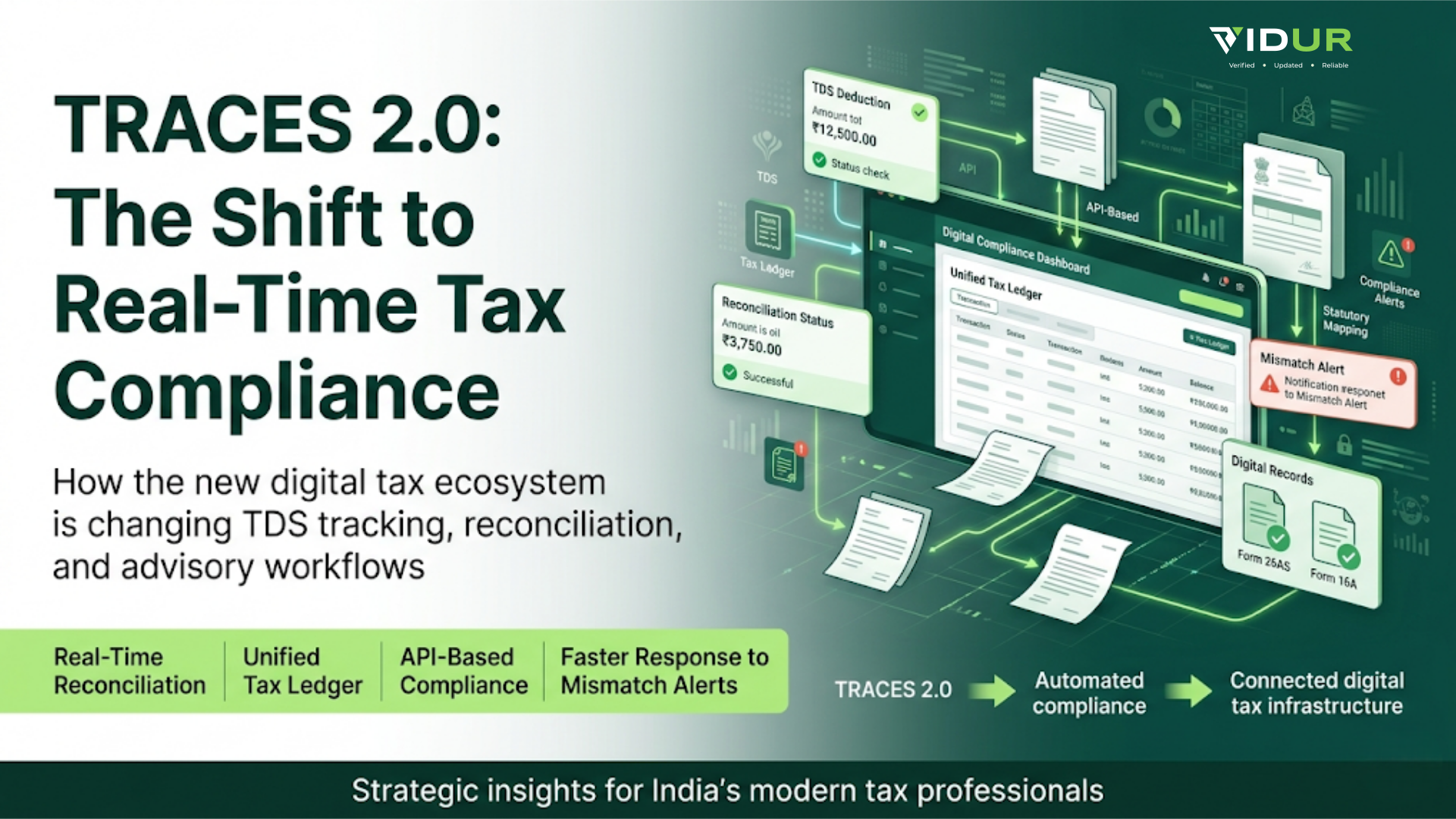
Under the new regime, the moment a deductor files their quarterly return or even an “On-the-Go” payment (like TDS on property or rent), the credit is instantly pushed to the taxpayer’s Unified Tax Ledger (UTL). For HNW clients with multiple income streams, this means “Tax Passbooks” are always accurate to the minute.
AI-Powered Demand Management
TRACES 2.0 utilizes machine learning to identify “apparent-on-face” errors. Before a demand notice is even issued, the system sends a “pre-correction” alert to the practitioner. This allows CAs to fix mismatches before they escalate into formal litigation, significantly reducing the “rectification” workload.
2. The Unified Tax Ledger (UTL) vis-à-vis Form 26AS
The 2025 Act has officially phased out the fragmented Form 26AS and AIS/TIS in favor of the Unified Tax Ledger.
Total Financial Visibility
The UTL doesn’t just show TDS; it integrates GST payments, custom duties, and even foreign remittances tracked through the LRS (Liberalized Remittance Scheme).
Statutory Mapping
For a tax lawyer, the UTL provides a “statutory trail” that is admissible in the Income Tax Appellate Tribunal (ITAT). Because the ledger is cryptographically signed by the department, the burden of proof for “credit-denial” has shifted back to the revenue department, providing a massive procedural advantage to the taxpayer.
3. API-Based Compliance for Corporate Houses
For large corporate finance teams, the most significant shift is the opening of Compliance APIs. TRACES 2.0 allows corporate ERPs to connect directly to the tax department’s servers.
Automated Lower-Deduction Certificates
The manual filing of Form 13 is being replaced by an automated, data-driven system. If the system’s “Risk Score” for a company is low, TRACES 2.0 can issue a lower-TDS certificate in a matter of hours, based on the historical data in the digital ecosystem.
Virtual Digital Assets (VDA) Tracking
The digital ecosystem now includes a dedicated module for VDA-TDS. Every transaction on an Indian exchange is automatically reported and reconciled, ensuring that HNW digital portfolios are never out of compliance.
4. The Challenges of a “Live” System
While empowering, the digital ecosystem is unforgiving. Under the Income Tax Act, 2025, the timeline for responding to system-generated “mismatch alerts” has been shortened.
The 72-Hour Response Window
For certain high-value transactions, if a mismatch is flagged in TRACES 2.0, the practitioner may only have 72 hours to clarify the entry before the system automatically blocks the associated refund or raises a provisional demand.
The “Bilingual” Digital Burden
CAs must still manage the “Legacy TRACES” for years prior to 2026 while mastering the 2.0 interface for the current Tax Year.
The 24-Hour Update Mandate: Why Speed is Your Only Defense
In a digital ecosystem where the portal’s logic can be tweaked overnight through a “Technical Circular,” staying updated is a survival requirement. If the CBDT notifies a new API schema or a change in the “TDS Mapping” for Tax Year 2026 at 9:00 PM, your firm must be aware of it before the first filing begins the next morning.
Why VIDUR AI is Your Indispensable Partner
The complexity of TRACES 2.0 and the real-time tax ecosystem is exactly why manual research and “checking the portal” aren’t enough. You need an intelligence partner that bridges the gap between the law and the technology.
The 24-Hour Pulse
Our dedicated research team monitors every technical notification, portal update, and circular from the CBDT and the TRACES cell. Vidur AI is updated real time, ensuring you never provide advice based on a legacy digital workflow.
150+ Authentic Publications
Access the latest commentaries on “Digital Tax Administration”. Vidur AI provides the deep legal research needed to defend against system-generated demands.
Precision Drafting & Advisory
Whether you are drafting a response to a TRACES 2.0 “pre-correction” alert or researching the legal validity of a system-generated notice under the 2025 Act, Vidur AI provides the “Legal Accuracy” you need to stay ahead.
Master the digital handshake with Vidur AI. Don’t just react to portal notifications—anticipate them with the only AI tool designed for the modern Indian tax professional. Switch to Vidur AI today and lead your clients into the future of seamless compliance.