


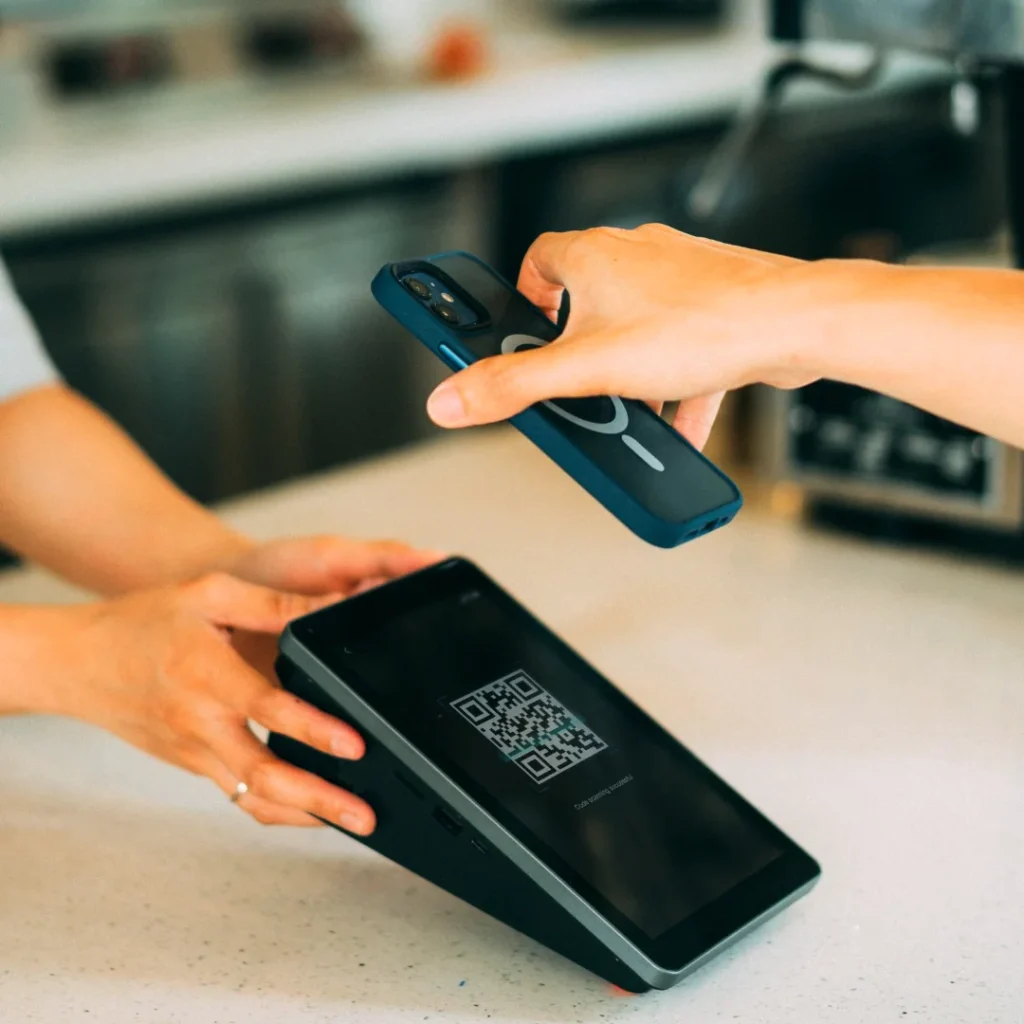
Meera runs an electronics shop. Half her customers pay by scanning a QR code, and for six years that has cost her nothing. No fee, no ledger entry, no thought. However, post Diwali that may stops being true for a large part of her sales.
If you run a business that takes UPI, Meera’s story is probably yours. Here is what is changing, what it does to your transactions, books, expenses and GST, and what to sort out before the first deduction lands.
The day the free ride ends
NPCI’s official FAQs, dated 15 September 2026, set out the framework. In plain words:
- A 0.4% merchant discount rate (MDR) applies to person-to-merchant UPI payments above ₹2,000.
- From ₹75,000 upwards, the fee is capped at ₹300 per transaction.
- Customers pay nothing. Apps are barred from adding platform fees, and merchants cannot pass the MDR on to buyers.
- Person-to-person transfers stay free, and so do UPI AutoPay mandates for things like SIPs, utility bills and OTT subscriptions.
- Payments through credit-linked UPI (such as RuPay credit cards or pre-sanctioned credit lines) follow separate credit product rules and are outside this MDR.
NPCI’s case is that UPI’s running costs, which it puts at around ₹20,000 crore a year, can’t be met by government subsidy alone. It also points out that card MDRs run far higher, from 1.5% to 2.5% for credit cards and up to 0.90% for debit cards. The Supreme Court declined to stay the rollout on 28 September but has asked the Centre, RBI and NPCI to respond within four weeks. So the date stands for now.
What it does to your transactions
The ₹2,000 line is a cliff. A payment of exactly ₹2,000 is free, and ₹2,001 is not. Don’t be surprised if some customers start splitting payments, or if a few businesses quietly nudge people towards cash or bank transfer. The Supreme Court petition itself argues that cliffs like this can distort behaviour. Your bank statement will also stop matching your invoices. Each qualifying UPI receipt will land slightly short of what the customer paid, so reconciliation needs a rule, not a calculator.
NPCI’s FAQs say shelf prices won’t rise because merchants will absorb the cost. That is a hope, not a law of nature. Merchants with thin margins will do the sums for themselves, and some will adjust pricing or acceptance habits. Plan for that in your own business instead of assuming it won’t happen.
What it does to your books
A consultant invoices a client ₹10,000 plus 18% GST and receives a payment of ₹11,800 through UPI. If the payment provider deducts MDR and GST on that charge, the amount credited to the bank account will be lower.
The common mistake is to record this net bank credit directly as sales. Doing so understates revenue, creates reconciliation mismatches between your books and GST returns, and hides a legitimate business expense.
Record ₹10,000 as revenue and ₹1,800 as output GST, then record the deductions separately:
- MDR (Merchant Discount Rate): ₹47.20 recorded in an operating expense ledger.
- GST on MDR: ₹8.50 recorded as Input Tax Credit (ITC), provided the payment aggregator’s monthly tax invoice is available and reflects in your GSTR-2B.
- Net Bank Credit: ₹11,744.30.
Here is how this appears as proper journal entries:
Entry 1: On raising the invoice
| Particulars | Dr. (₹) | Cr. (₹) |
|---|---|---|
| Client A/c ……………………………………… Dr. | 11,800.00 | |
| To Consulting Revenue / Fees A/c | 10,000.00 | |
| To Output CGST A/c (9%) | 900.00 | |
| To Output SGST A/c (9%) | 900.00 |
(Being consulting services invoiced to the client at ₹10,000 plus 18% GST)
(For inter-state clients, credit Output IGST A/c (18%) with ₹1,800.00 instead of CGST/SGST).
Entry 2: On receiving the UPI payment
(Assuming an inter-state payment aggregator billing with IGST, which is standard practice for major gateways like Razorpay, PhonePe, and Cashfree):
| Particulars | Dr. (₹) | Cr. (₹) |
|---|---|---|
| Bank A/c ……………………………………… Dr. | 11,744.30 | |
| Payment Gateway / MDR Charges A/c ……… Dr. | 47.20 | |
| Input IGST A/c (18%) on MDR A/c ………… Dr. | 8.50 | |
| To Client A/c | 11,800.00 |
(Being UPI payment of ₹11,800 received, net of MDR of ₹47.20 and IGST of ₹8.50 deducted by the payment provider)
(If your business and the payment gateway’s registered billing office are in the same state, split the tax into Input CGST A/c Dr. ₹4.25 and Input SGST A/c Dr. ₹4.25).
Reconciliation Check
- Client Ledger: Fully knocked off to zero.
- GSTR-1: Accurately reports gross revenue of ₹10,000 and ₹1,800 tax liability.
- GSTR-3B: Captures ₹8.50 eligible input credit against processing expenses.
- Profit & Loss Statement: Accurately captures gross professional income of ₹10,000 alongside ₹47.20 finance/bank charges.
If your accounting or POS software cannot automate this breakdown upon payout import, configure the settlement rules today. Deferring manual adjustments until the financial year-end risks audit discrepancies and disallowed input tax credit.
What it does to your business expenses
MDR is an indirect expense, and it deserves its own ledger, such as “Payment Gateway/ MDR Charges”. Don’t bury it in “Bank Charges” or “Miscellaneous”, where it will vanish into the noise and you’ll never see how much UPI is costing you.
Once it has a name, you can manage it. Look at which of your sales sit above ₹2,000, how much of your collection comes through UPI, and whether your margin can absorb the cost. For a business running on single-digit margins, the MDR can take a visible bite out of profit. Businesses that sell high-ticket items to walk-in customers, such as hospitals, electronics, medical stores and restaurants, will notice it first. B2B businesses that settle by NEFT, RTGS or IMPS will barely feel it.
What it does to GST
The first worry people voice is “Am I paying GST on GST?” You aren’t. The 18% GST applies to the MDR, which is a separate payment-processing service. It is not charged again on the GST inside your customer’s invoice.
The next question is whether you get that GST back. For a registered business making taxable supplies, generally yes, as input tax credit, if you meet the usual conditions:
- You hold a valid tax invoice for the MDR service from your bank or payment partner.
- The credit isn’t one of the blocked credits under Section 17(5).
- The supplier has paid the tax and filed, so it shows up in your GSTR-2B. That can mean a short wait before the credit is usable.
If you make exempt supplies, are under the composition scheme, or are unregistered, there is no credit to claim. The MDR and its GST are then a straight cost, and your margins should be re-checked with that in mind.
Worth knowing: NPCI’s FAQs don’t discuss GST on the MDR, so watch for any formal notification and confirm with your CA.
Questions still hanging in the air
- Refunds. If a customer returns something, is MDR charged again on the refund leg, and is the original MDR returned? The framework is silent. Plan on the original charge being a sunk cost until someone clarifies.
- The court case. Responses are due within four weeks, but the rules apply from 15 October regardless. Don’t postpone system changes waiting for a verdict.
- The rulebook may move. NPCI says operational parameters and category caps are decided by the UPI and Services Steering Committee, so expect updates.
- Help for small merchants. A dedicated fund for small merchant acceptance, especially in tier 3 to 6 centres, is promised, with the detailed framework due within three months in consultation with RBI.
Your pre-Diwali game plan
- Open an MDR expense ledger and an input GST on MDR ledger.
- Have your billing or accounting software book the MDR automatically on qualifying UPI receipts.
- Ask your acquiring bank or payment partner how and when MDR invoices will be issued.
- Find out which category you fall into: regular 0.4%, flat ₹5, capital market, or exempt.
- If you’re a small merchant, keep an eye on the ₹1 lakh monthly line.
- Re-run your margins if you are exempt, on composition, or run thin margins.
- Write down your refund assumption and revisit it when rules are clarified.
The bottom line
Most UPI payments stay free, and ordinary customers will never see a charge. But if you take meaningful UPI volume above ₹2,000, you now have a new cost with its own ledger, its own GST trail and its own reconciliation. The ones who will be fine without a scramble are those who set up the system before the first deduction arrives.