

Artificial Intelligence (AI) is rapidly transforming the world of finance and accounting, ushering in an era where Chartered Accountants (CAs) are expected to be not just number crunchers but strategic advisors. In India, as businesses become more complex and clients demand deeper insights, the role of CAs is continuously evolving.
One area where AI can make a significant impact is in the preparation of advisory notes—documents that provide analysis, recommendations, and action points for clients. Here’s how CAs can harness AI tools like Vidur to create more insightful, accurate, and timely advisory notes.
Automating Data Collection and Analysis
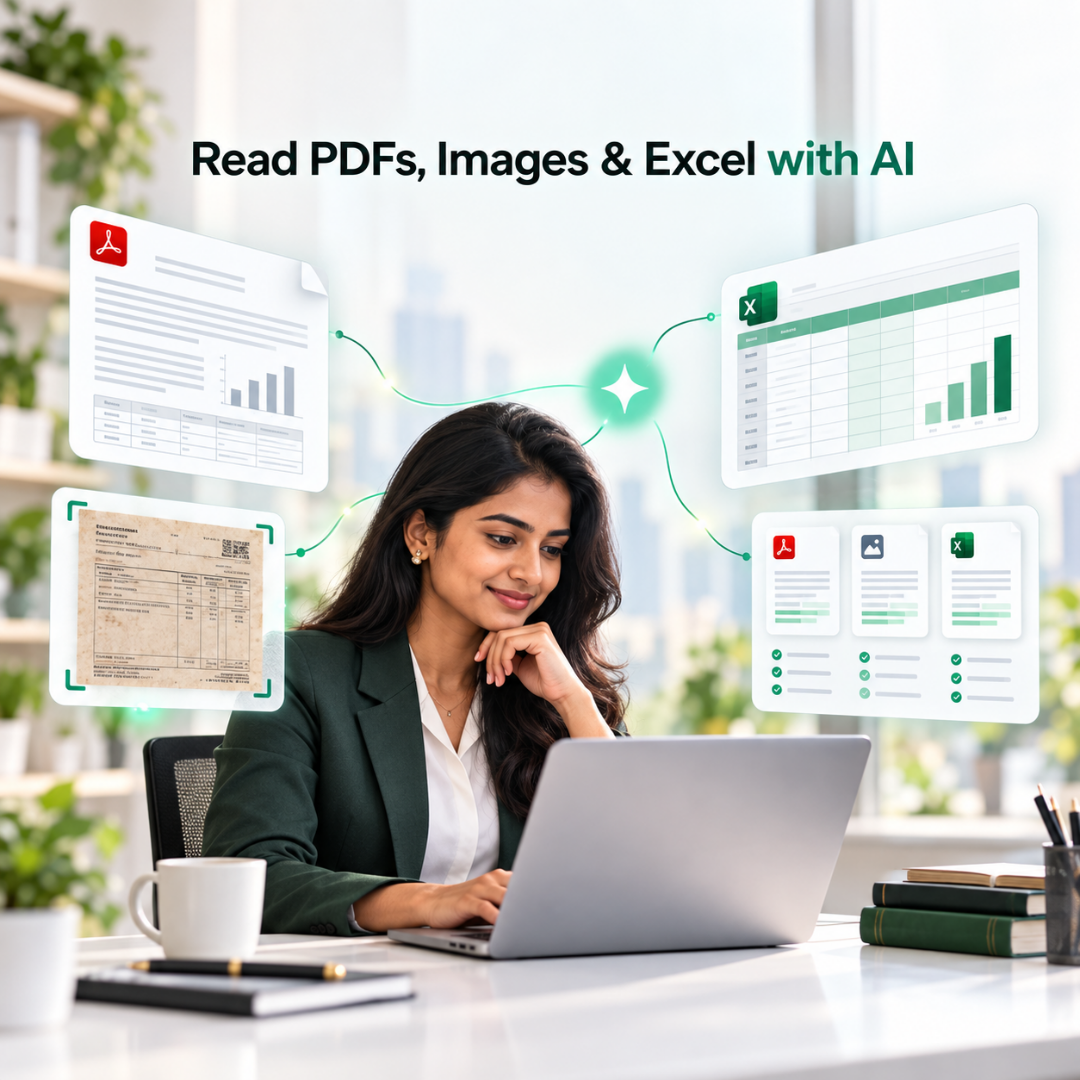
Traditionally, preparing advisory notes involves gathering vast amounts of financial data, regulatory updates, and market intelligence—a time-consuming and error-prone process. AI-powered tools can automate data extraction from client records, bank statements, tax filings, and even news sources.
These systems use natural language processing (NLP) and machine learning algorithms to identify patterns, anomalies, and trends, which form the foundation of robust advisory notes.
For instance, instead of manually sifting through hundreds of invoices or transaction records, CAs can employ Vidur to categorise and summarise data, flag inconsistencies, and generate preliminary analytical reports. This not only saves time but also ensures that the data is comprehensive and up-to-date.
Enhancing Accuracy and Reducing Human Error
Errors in advisory notes can have serious implications for clients, ranging from compliance issues to missed business opportunities. AI systems, when properly trained, can cross-check data entries, calculations, and assumptions, significantly reducing the risk of mistakes.
AI-driven audit tools can review large volumes of information in seconds, highlighting discrepancies that might otherwise go unnoticed.
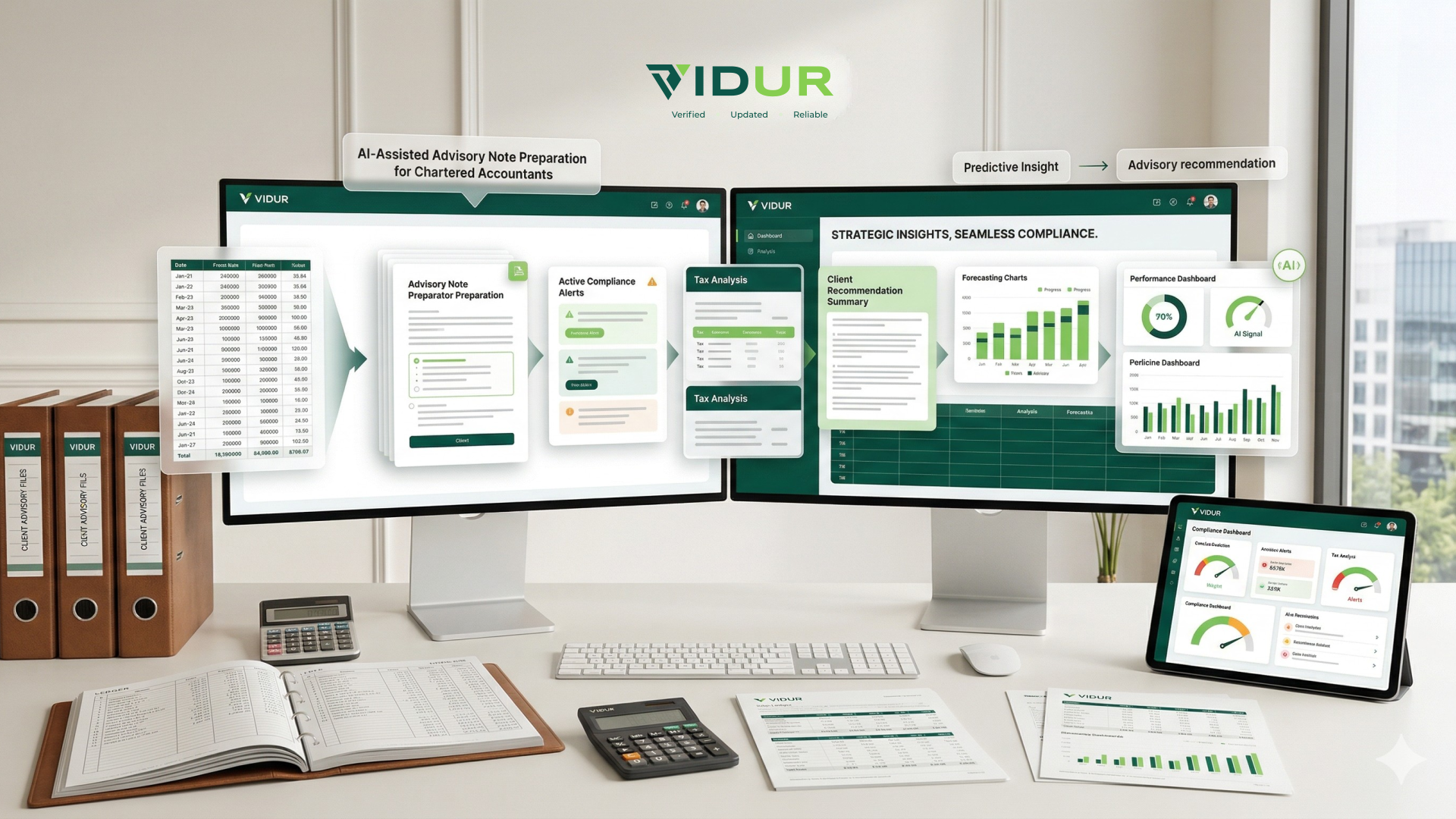
Moreover, AI tools like Vidur stay current with changes in Indian tax laws, GST provisions, and other regulatory frameworks. This ensures that the advice provided is not only accurate but also aligned with the latest compliance requirements.
Customising Recommendations Using Predictive Analytics
No two clients are alike, and generic advisory notes often fail to address specific business needs. AI excels at analysing historical client data and external market trends to offer tailored recommendations.
By utilising predictive analytics, CAs can forecast future cash flows, tax liabilities, or sector-specific risks for their clients.
Streamlining Report Generation and Visualisation
Effective advisory notes are not just about content but also about presentation. AI tools can automatically generate charts, graphs, and dashboards that make complex financial data easy to understand. This visualisation helps clients grasp key takeaways at a glance, making the advisory note more actionable.
Additionally, AI-powered templates can standardise the format of advisory notes, ensuring consistency and professionalism across all client communications.
Facilitating Real-Time Collaboration and Updates
AI can integrate seamlessly with cloud-based platforms, allowing CAs and clients to collaborate in real-time. Advisory notes can be updated dynamically as new data becomes available or as client queries arise.
AI chatbots and virtual assistants can even answer routine questions, schedule follow-ups, or highlight urgent matters that require immediate attention.
This level of interactivity not only enhances client satisfaction but also positions the CA as a forward-thinking, tech-savvy advisor.
Ensuring Data Security and Compliance
With the increasing reliance on digital tools, data security and privacy are paramount. Leading AI platforms come equipped with robust encryption, access controls, and audit trails, ensuring that sensitive client information remains confidential and compliant with Indian data protection regulations.
CAs should, however, remain vigilant and choose AI solutions that are transparent, auditable, and tailored to the unique requirements of the Indian regulatory environment.
Upskilling and Embracing Change
To fully capitalise on AI’s potential, CAs need to upskill themselves and their teams. Many professional bodies in India now offer training programmes on AI applications in accounting and advisory services. By staying abreast of technological developments, CAs can offer higher-value services and maintain a competitive edge.
Embracing AI is not about replacing the human touch but augmenting it. The ability to interpret AI-generated insights and translate them into strategic action remains a uniquely human skill.
Conclusion
AI is reshaping the landscape of client advisory for Chartered Accountants in India. By automating routine tasks, enhancing accuracy, and delivering personalised, data-driven insights, Vidur enables CAs to prepare better advisory notes that truly add value for their clients.
The future belongs to those who are willing to adapt, learn, and harness technology to deliver superior outcomes. For CAs, integrating AI into their advisory process is not just an option—it is a necessity to stay relevant and impactful in a rapidly evolving business world.