

“The High Court just dismissed our writ,” the client says, his voice tense. “They said we must exhaust the ‘alternate remedy’ now that the Tribunal is functional. But the demand is ₹2 Crores—if we mess up this appeal, is there a Plan C?”
The Chartered Accountant leans back, steadying the conversation. “In tax litigation, especially with the GST Appellate Tribunal (GSTAT) now operational as of February 2026, the Tribunal is effectively the final fact-finding authority. A mistake here isn’t just a procedural hiccup; it can lead to a summary dismissal that even the Supreme Court may refuse to revive.”
For practitioners, the transition from “writ-only” strategies to the formal GSTAT (Procedure) Rules, 2025 requires a surgical approach. As the June 30, 2026, deadline for backlog cases approaches, the dual-compliance pressure of current filings and legacy appeals has reached a fever pitch.
The Strategic Shift: From Form to Substance
While the GSTAT Office Order issued in January 2026 promised “lenient scrutiny” for form-related defects until July 2026, this leniency does not cover substantive legal failures. Practitioners must distinguish between a “minor clerical error” and a “jurisdictional defect” that can invalidate an appeal under Section 112 of the CGST Act.
10 Critical Mistakes to Avoid
Miscalculating the Staggered Limitation Period
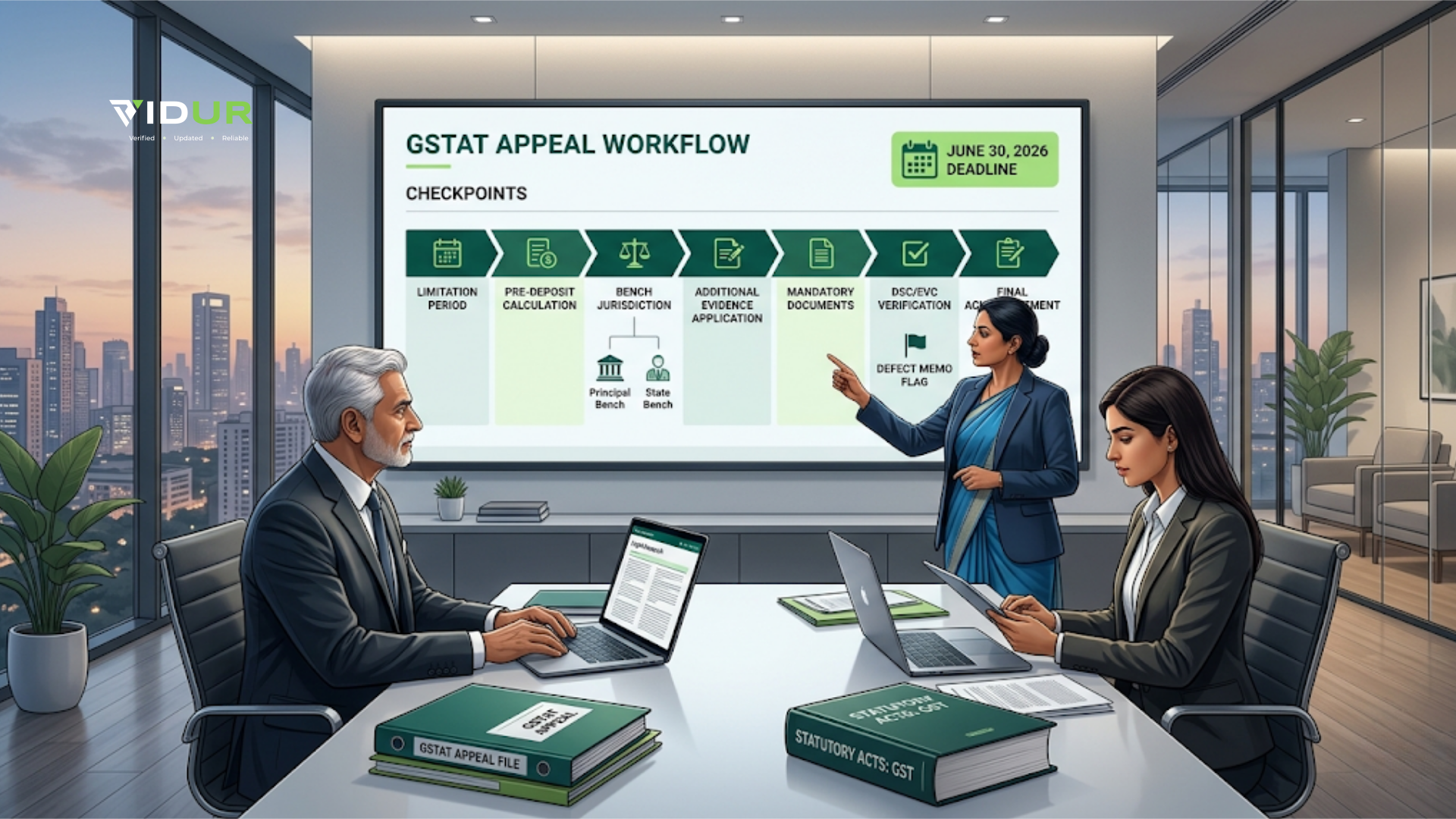
The most fatal error in 2026 is missing the “backlog” deadline. For any order communicated before April 1, 2026, the absolute outer limit to file an appeal is June 30, 2026. For orders after this date, the standard 3-month window applies.
Incorrect Pre-Deposit Quantum
Following the Finance Act 2025 amendments, the pre-deposit is now 10% of the disputed tax (capped at ₹20 Crores), which is in addition to the 10% paid at the first appellate stage. A common mistake is failing to pay the 10% pre-deposit for penalty-only appeals, a new requirement effective from April 1, 2025.
Uploading Unsigned Scanned Documents
While the portal accepts PDFs, the Registry has clarified that physical documents (like older OIOs or OIAs received by post) must be printed, signed on every page by the appellant, and then scanned. Simply scanning the original without the appellant’s fresh attestation is being flagged as a substantive defect.
Jurisdictional Bench Mismatches
Filing a “Place of Supply” dispute at a State Bench instead of the Principal Bench in New Delhi is a recurring error. Under Section 109, the Principal Bench has exclusive jurisdiction over matters where one of the issues involves the determination of the place of supply.
Relying on “New Evidence” Without Application
Under Rule 5 of the Appeal Rules, you cannot produce evidence before the Tribunal that wasn’t before the Adjudicating Authority, unless you file a specific application for Additional Evidence. Attempting to sneak in new bank reconciliations or contracts without this application often leads to them being struck from the record.
Failure to Verify via DSC/EVC
An appeal is not “filed” until it is digitally signed. Waiting until 11:00 PM on the deadline day only to find an expired DSC or a GSTN portal validation loop is a risk no professional should take.
Overlooking the “Final Acknowledgement”
The portal generates a provisional acknowledgement immediately, but the Final Acknowledgement (which freezes the limitation period) is only issued after the Registry completes its preliminary scrutiny. Failing to follow up on “Defect Memos” within the 7-day rectification window can lead to the appeal being deemed “never filed.”
Missing Mandatory Documents (SCN/OIA)
The March 2026 Scrutiny Instructions are strict: the Show Cause Notice (SCN), the Order-in-Original (OIO), and the Order-in-Appeal (OIA) are mandatory attachments. If the OIA refers to multiple OIOs, a separate appeal form must be filed for each OIO being challenged.
Improper Ground Structuring
Vague grounds like “The order is against the principles of natural justice” without specific instances are being discouraged. Grounds must be concise, numbered, and distinct, separating factual errors from legal misinterpretations.
Ignoring the Authorised Representative Registration
Under Section 116, any Advocate or CA representing a client must be registered on the GSTAT portal. If your Vakalatnama or Authorisation Letter is uploaded but your profile isn’t verified, the Registry will block your appearance on the day of the hearing.
The Real Time Update Challenge
In the current landscape, the GSTAT Registry often issues “Practice Notes” or portal patches overnight. For instance, the recent February 2026 patch changed how interest on pre-deposits is calculated during the filing stage. Vidur AI ensures that you are never caught off guard. Our engine is updated within 24 hours that impacts GST litigation.
With access to 150+ publications and real-time portal trackers, Vidur AI helps you draft grounds of appeal that are not just legally sound but procedurally perfect.
Why Vidur AI is Your Litigation Shield
Filing a GSTAT appeal is the last line of defense for your client’s cash flow. With ₹2 lakh appeals expected by June 2026, the Tribunal’s scrutiny will only get tighter. VIDUR AI acts as your digital co-counsel, providing instant research on “Place of Supply” precedents, drafting precise grounds, and ensuring your pre-deposit calculations align with the latest Finance Act mandates.
Don’t let a procedural slip-up cost your client’s case! Future-proof your litigation practice today.