


It Started With a Guarantee
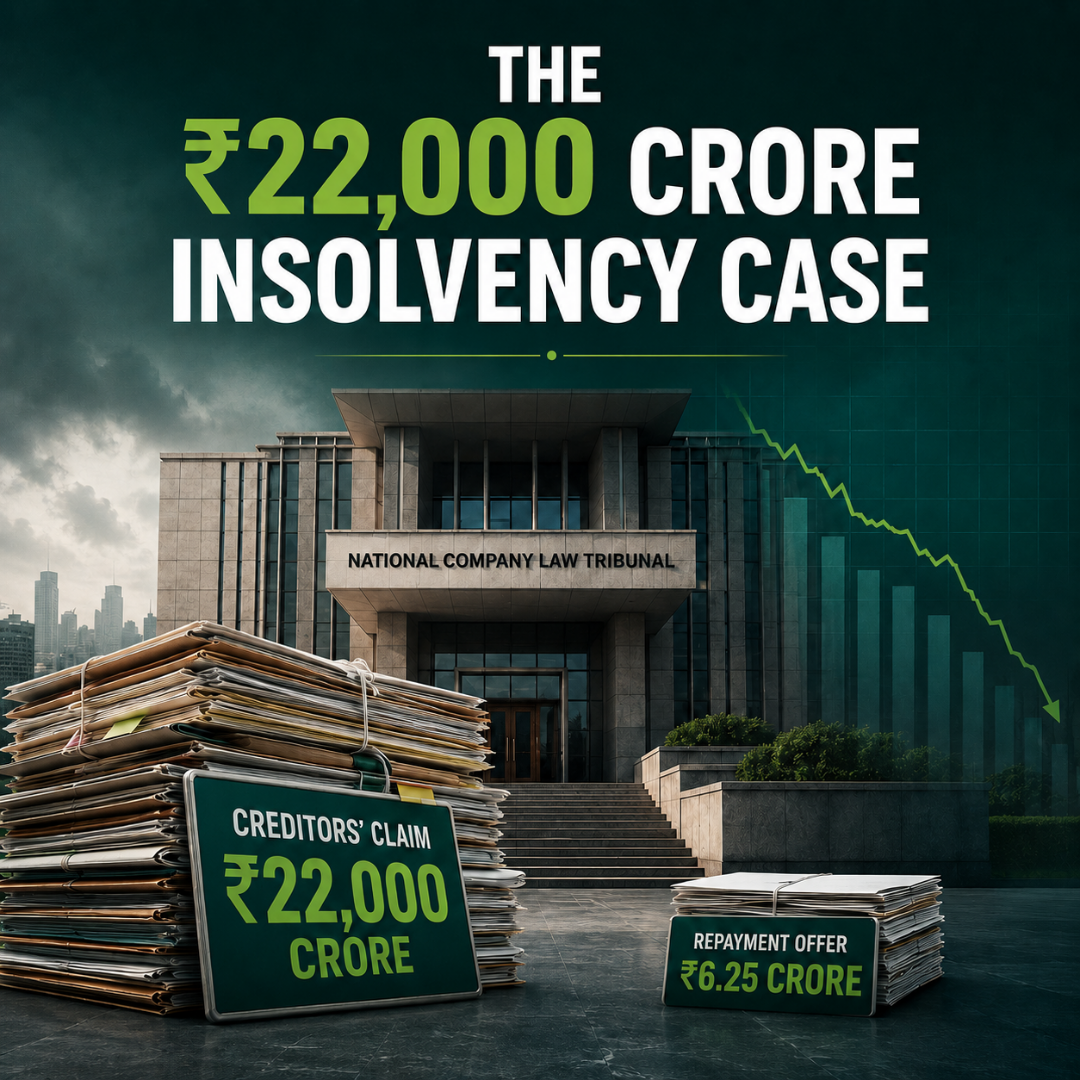
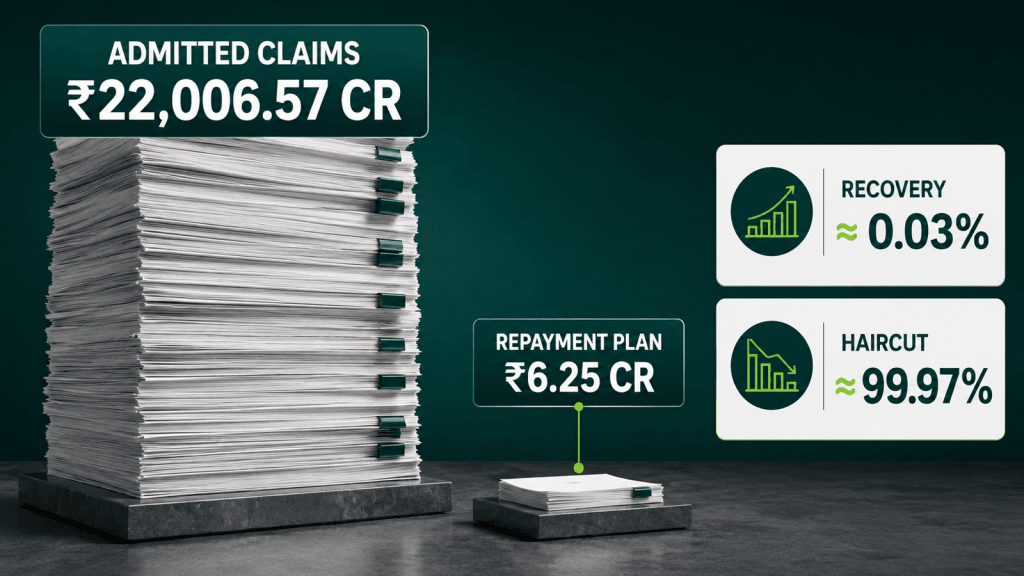
Very few personal insolvency cases in India have drawn as much attention as the one involving Subhash Chandra, founder and chairman emeritus of Zee Entertainment Enterprises and chairman of the Essel Group. At the heart of the dispute is a jaw-dropping number, that creditors have admitted claims of roughly ₹22,006.57 Cr. against him as a personal guarantor, while Chandra’s proposed repayment plan offers to settle for just ₹6.25 cr plus ₹25 lakh toward insolvency process costs. That works out to a recovery of about 0.03%, or a haircut of nearly 99.97% for lenders. It’s the kind of gap that makes headlines. But to understand how a case ends up here, it helps to start at the beginning with the law that made this whole process possible in the first place.
What Is Section 95, Really?
Most people have heard of companies going bankrupt. Fewer know that in India, the person who personally guarantees a company’s loan can be pulled into insolvency proceedings too and that’s exactly what Section 95 of the Insolvency and Bankruptcy Code, 2016 is for.

In plain terms, Section 95 gives a lender the power to go after a personal guarantor directly. If you’ve signed a personal guarantee for your company’s loan , which promoters and directors routinely do, and the company defaults, the bank doesn’t have to wait around for the company’s own insolvency case to wrap up. It can walk straight up to the National Company Law Tribunal (NCLT) and file an application against the guarantor, as an individual. Before doing that, the bank has to send a formal demand notice first, giving the guarantor a chance to pay up within fourteen days. If that doesn’t happen, the application goes in, laying out exactly what’s owed and how the default happened. And the moment that application is filed, an automatic protective freeze called an interim moratorium — kicks in around the guarantor’s assets while the case plays out.
This is precisely the door that was used to bring Subhash Chandra into insolvency proceedings. Indiabulls Housing Finance Limited, one of his creditors, invoked Section 95 to start the personal insolvency resolution process against him as guarantor for Essel Group’s borrowings. Everything that followed which is the mounting claims, the repayment plan, the disputes over how much he actually owes traces back to that one filing.
How the Numbers Got So Big
Once the process was underway, creditors came forward with their claims, and they added up fast eventually reaching that enormous ₹22,006-crore figure. Against that, Chandra put forward a repayment plan offering to pay ₹6.25 crore, arguing it was the best he could realistically manage. Unsurprisingly, several lenders weren’t happy with the numbers, and some also raised concerns about how the claims had been processed and how the voting on the plan had actually gone.
Why the Tribunal Members Couldn’t Agree
What makes this case a genuine legal puzzle it’s how differently the judges who heard it saw the matter. The case first went before a two-member NCLT bench: Ashok Kumar Bhardwaj (Judicial Member) and Reena Sinha Puri (Technical Member). They couldn’t agree:
Justice Bhardwaj was inclined to approve the plan, but only as against the creditors who had actually supported it, whereas, Puri rejected the plan outright, citing serious irregularities in how the resolution professional had processed and admitted claims, along with concerns over the voting process.
With no consensus, the matter was referred to a third member Nilesh Sharma under Section 419(5) of the Companies Act, 2013, the provision used to break deadlocks on tribunal benches.
On August 25, 2026, Sharma took yet a third position: he approved the plan and held that it would be binding on all creditors, including those who had opposed it though he did carve out certain disputed claims for exclusion and reallocation among the remaining eligible creditors. Three judges, three different outcomes. When the matter returned to the original two-member bench on August 31, they concluded that no majority view had actually emerged from the reference — since all three opinions diverged from one another, there was no clean 2-1 verdict to act on.
A Five-Member Bench Steps In
Faced with this unprecedented deadlock, the matter was escalated to the NCLT President, Justice (retd) Anupinder Singh Grewal, who took the rare step of constituting a five-member special bench comprising himself, Judicial Members Bachu Venkat Balaram Das and Mahendra Khandelwal, and Technical Members Atul Chaturvedi and Ravindra Chaturvedi.
As on September 1, 2026, this special bench: Stayed the operation of Nilesh Sharma’s August 25 order approving the repayment plan, holding that it could not be given effect to since no majority view had emerged among the members who considered it. It barred Chandra, in his capacity as guarantor, from selling, transferring, alienating, or otherwise dealing with his properties directly or indirectly while the case is pending, and issued notices to all parties, including Chandra, and decided to hear the matter afresh from the beginning.
In effect, the tribunal hit the reset button on months of proceedings, while simultaneously locking down Chandra’s assets to prevent any change in the status quo.
The NCLAT Angle
The dispute has also touched the National Company Law Appellate Tribunal (NCLAT), where a three-member bench led by Officiating Chairperson Justice Yogesh Khanna has been monitoring developments. Solicitor General Tushar Mehta, appearing for the dissenting creditors, informed the appellate tribunal of the fresh five-member NCLT bench and its stay order. Mehta sought and was given additional time to determine whether, given this new development at the NCLT level, the creditors he represents still wish to pursue their appeal before the NCLAT.
The case has also made its way to the National Company Law Appellate Tribunal, where lenders including Union Bank of India, Canara Bank, and LIC Housing Finance have filed appeals challenging the earlier approval of the plan. The next hearing is on September 23, where the tribunal will address creditor objections and evaluate the proposal’s validity.
The Bigger Picture
Strip away the legal complexity, and this case is really about a few simple but important questions. What happens when the very mechanism meant to resolve a deadlock ends up creating a bigger one? How small can a settlement offer be before it stops looking like a genuine resolution and starts looking like creditors are simply being asked to walk away? And while all of this gets argued out, how do you make sure nothing changes on the ground that assets aren’t quietly sold off before the dust settles?
Those are the questions the tribunals are still working through. Given how much money is involved and how tangled the procedural history already is, this is a case that’s likely to answer many questions.