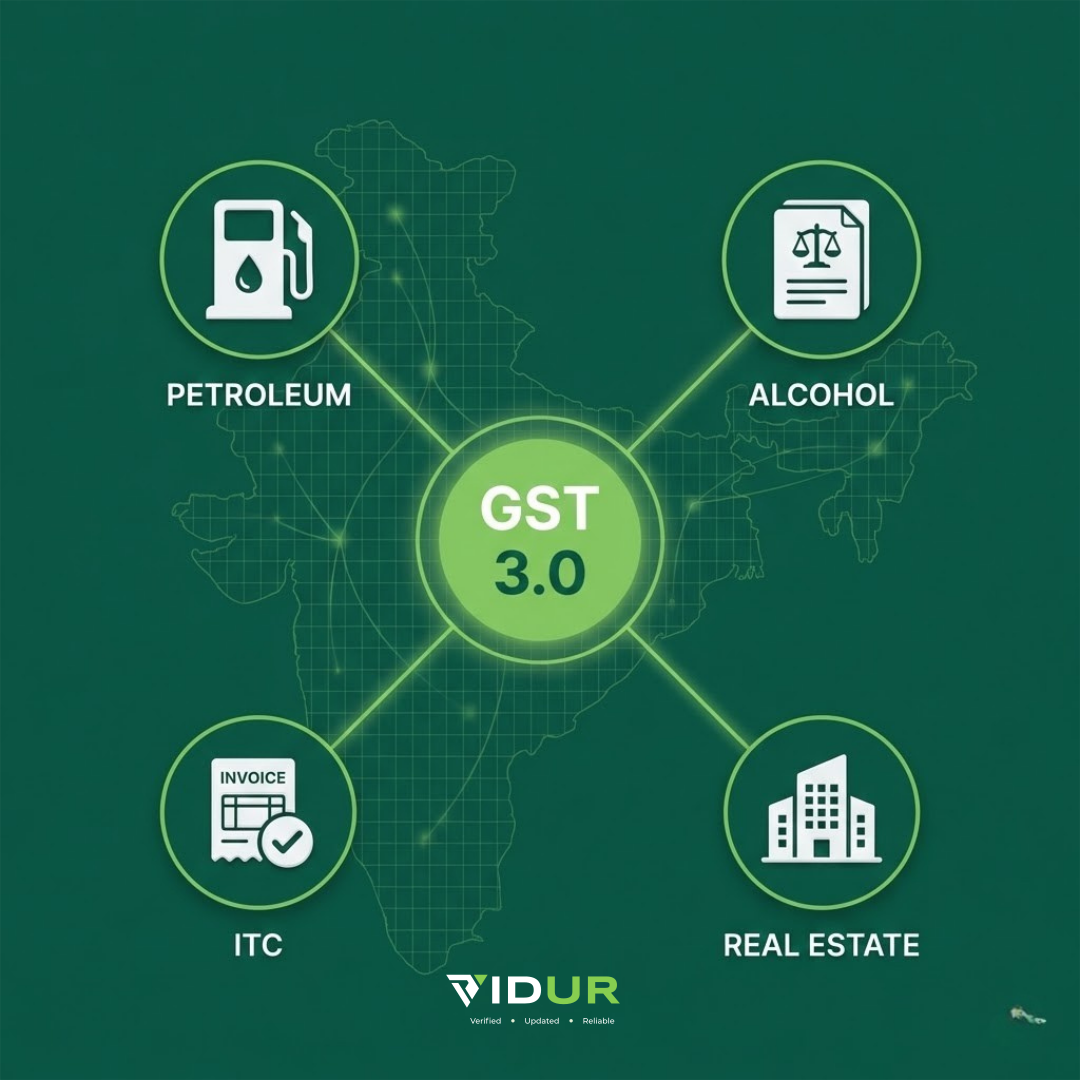


The Silent Threat to Your Practice: Why GST Compliance Is a Minefield
If you’re a Chartered Accountant or tax lawyer, you know the feeling: that slight dread when a client’s GST file lands on your desk.
It’s not just about turnover, input tax credit (ITC), or return filing. It’s about navigating:
- Constantly changing circulars and notifications
- Evolving advance rulings and case law
- Tight timelines and penalties
In today’s environment, a single GST mistake can trigger:
- Interest and penalties
- ITC denial
- Scrutiny, audit, or even litigation
The GST regime was designed for simplicity on paper, but in practice it is complex, dynamic, and unforgiving. For modern professionals, relying only on manual research isn’t just inefficient — it’s a risk to your client and your reputation.
Below are 4 common and costly GST compliance errors that quietly damage your clients’ bottom line — and how VIDUR, the AI assistant for Tax, Corporate & Regulatory Laws, helps you avoid them.
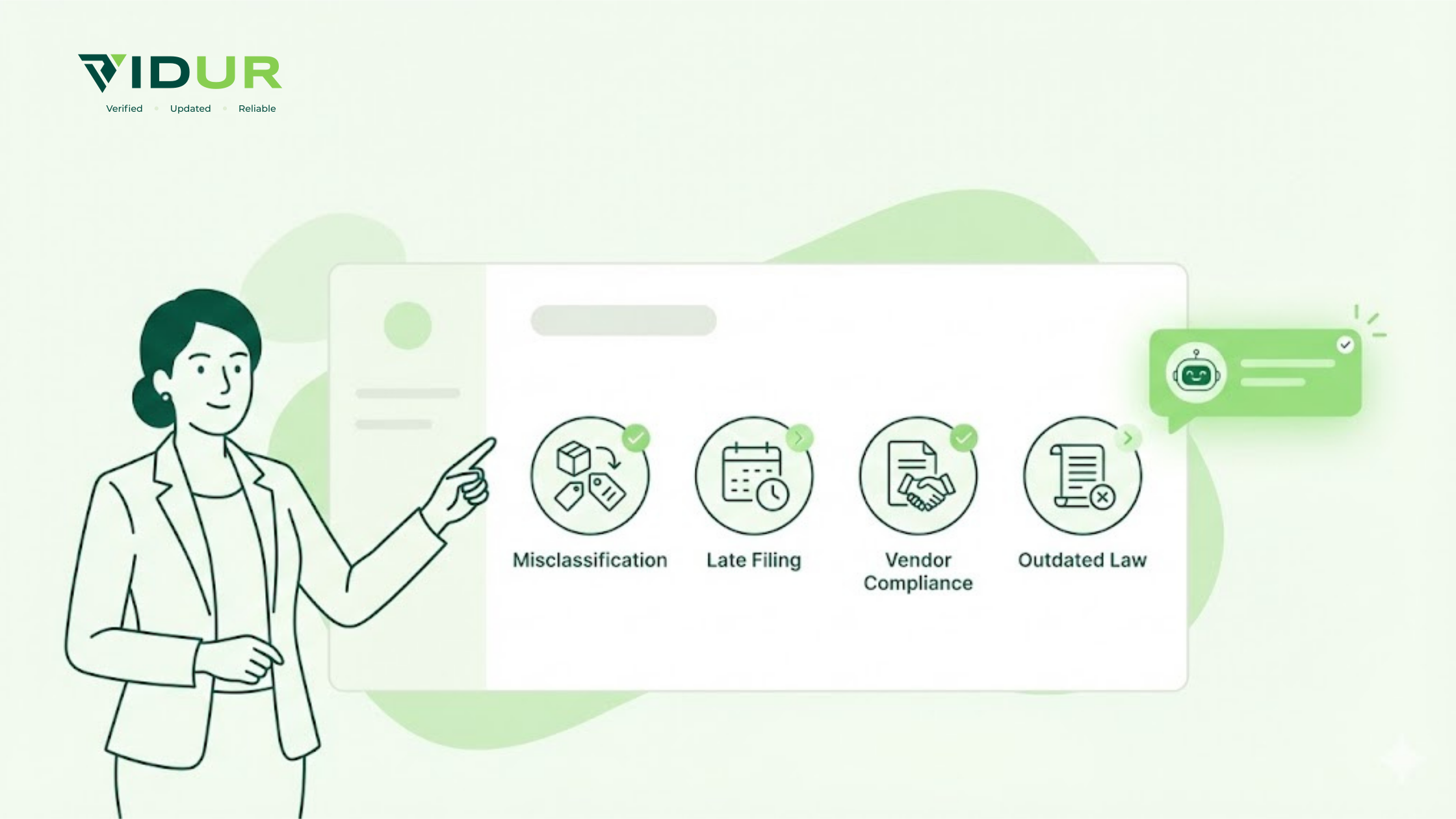
Error 1: Misclassification of Goods and Services
The Problem
Is it a supply of goods or services? Is it 5% or 18%?
With hundreds of HSN/SAC codes and complex transactions like works contracts, software, bundled services, and mixed supplies, misclassification is one of the highest-risk areas in GST.
A wrong classification can lead to:
- Underpayment of GST
- Allegations of tax evasion
- Show cause notices, penalties, and interest
- Retrospective tax demands
How VIDUR Helps
This is where VIDUR’s 150+ AI-ingested law books become your edge.
With a single query, VIDUR can:
- Cross-reference your client’s specific transaction with similar judicial precedents
- Pull relevant sections, rules, notifications, and case law on classification
- Provide a classification view grounded in both statute and precedent
Result:
You can confidently advise on the correct HSN/SAC and tax rate, reducing the risk of disputes and classification challenges.
Error 2: The Late Filing Penalty Spiral
The Problem
Late or non-filing of GSTR-1 and GSTR-3B is one of the simplest mistakes — but one of the most damaging.
Beyond late fee, the real fallout includes:
- Delayed ITC for recipients
- Loss of client’s business credibility
- Increased likelihood of scrutiny and notices
Manually tracking due dates for dozens or hundreds of clients is a constant firefight, and missing even one deadline can start a penalty spiral.
How VIDUR Helps
VIDUR won’t file the return for you — but it ensures your advice around late filing risk, relief, and condonation is always legally sound and up to date.
Using VIDUR, you can:
- Instantly check the current legal position on late fees, interest, and waivers
- Refer to the latest circulars, notifications, and council decisions on extensions or relaxations
- Draft legally robust representations or replies when seeking relief
Because VIDUR’s dynamic knowledge base is updated daily, you are always aware of fresh relaxations, amnesty schemes, or special extensions that can help your clients manage penalty exposure.
Error 3: Ignoring Vendor Compliance (The Chain Reaction)
The Problem
Under GST, your client’s input tax credit is only as safe as their vendors’ compliance.
If a vendor:
- Fails to upload invoices,
- Doesn’t pay tax, or
- Files an incorrect return,
your client’s ITC can be blocked or denied. For businesses with large vendor networks, manually monitoring vendor compliance is almost impossible.
Try VIDUR AI: https://ai.vidur.in
How VIDUR Helps
VIDUR works as an early warning system for legal and contractual risk.
You can use it to:
- Draft strong vendor agreements with clear GST compliance clauses
- Create due diligence checklists for vendor onboarding and review
- Stay updated on new notifications or rules that tighten vendor verification norms
Whenever the law changes around ITC dependency on vendor filing, invoice matching, or Section 16 conditions, VIDUR’s dynamic updates ensure you are:
- First to know, and
- First to advise your clients on required contractual and procedural safeguards.
This turns vendor compliance from a blind spot into a managed risk area.
Error 4: The “Old Law” Advisory
The Problem
The most dangerous GST error is not a wrong calculation — it’s giving advice based on outdated law.
A single:
- Supreme Court or High Court decision
- Finance Act amendment
- Clarificatory circular
can completely change the position on:
- ITC eligibility
- Place of supply
- Time of supply
- Exemptions and valuations
If your research is based on old PDFs, un-updated books, or stale notes, your advisory may already be obsolete by the time it reaches the client.
How VIDUR Helps
This is where VIDUR truly changes the game.
VIDUR’s in-house team of lawyers and CAs feeds the AI with daily verified updates across:
- GST
- Direct Tax
- Customs
- Corporate Law
- FEMA
- SEBI
When you ask a GST question, VIDUR doesn’t just search historic law — it:
- Checks the static layer (Acts, rules, commentary, books), and
- Filters it through the dynamic layer (latest amendments, circulars, and judgments)
This means your answers reflect the current legal reality, not last year’s position.
You move from being a reactive advisor to a proactive strategist, always aligned with the latest law.
Conclusion: Stop Researching, Start Advising
The future of tax and legal practice isn’t about whether you use AI — it’s about how intelligently you use it.
VIDUR is not a replacement for your expertise.
It is a force multiplier for your practice.
- It handles the complex, time-consuming legal research
- It helps you draft faster, better, and with citations
- It frees you to focus on strategy, risk, and client relationships
In a GST ecosystem where one error can trigger penalties, scrutiny, and litigation, VIDUR helps you:
- Cut down research time
- Reduce advisory risk
- Deliver flawless, up-to-date compliance guidance at scale
Call to Action
Ready to move beyond the fear of GST penalties and build a practice powered by speed and accuracy?
Start advising with VIDUR today.
👉 https://ai.vidur.in
Q1. What are the most common GST compliance errors businesses make?
Common GST compliance errors include misclassification of goods and services, late filing of GSTR-1 and GSTR-3B, ignoring vendor-level compliance, and giving advice based on outdated law.
Q2. How can VIDUR help CAs and lawyers with GST compliance?
VIDUR combines 150+ law books with daily updates from CAs and lawyers to provide instant, citation-backed answers, draft advisory notes, and help professionals stay aligned with the latest GST circulars, notifications, and judgments.
Q3. Why is relying only on manual GST research risky?
Manual research is slow and often based on outdated material. Given how frequently GST law changes, relying solely on manual methods increases the risk of giving incorrect or outdated advice, which can lead to penalties and litigation.