

GST notices are rarely straightforward. A simple-looking notice can involve multiple layers of factual verification, legal interpretation, and documentation. For CAs and tax professionals, drafting a reply is not just about responding—it is about protecting the client from potential tax demand, penalty, and litigation.
One of the most common and sensitive issues today is the denial of Input Tax Credit (ITC) due to the retrospective cancellation of the supplier GSTIN. These cases not only require technical understanding, but also strong drafting skills to establish the bona fide nature of the transaction.
This is where AI is becoming a practical support tool—helping professionals structure replies faster, without compromising on quality.
Why GST Notice Replies Take Time
A GST notice reply typically involves:
- Understanding the allegation
- Verifying transaction-level data
- Checking legal provisions and case laws
- Structuring arguments
- Drafting a clear and defensible response
Step-by-Step Guide to Draft GST Notice Reply Using AI
Step 1: Clearly Define the Issue
Instead of asking AI to “draft a GST reply,” define:
- Nature of notice (for example, ITC denial)
- Reason (for example, supplier GSTIN cancelled retrospectively)
- Period involved
- Client’s factual position (genuine purchase, tax paid, invoice available)
This clarity ensures that the output is relevant and structured.
Step 2: Use AI for Legal Positioning
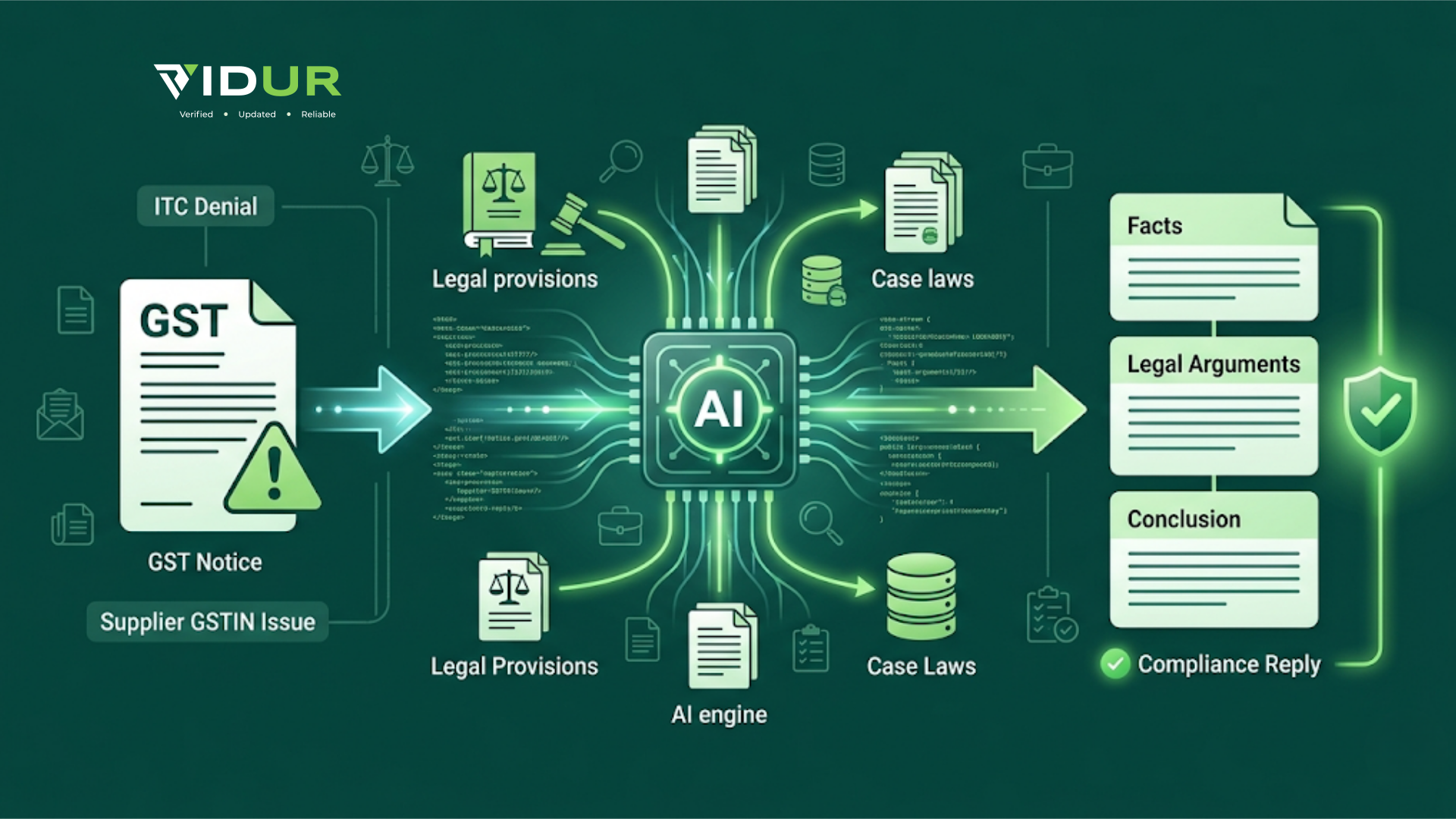
AI helps identify:
- Relevant GST provisions (in this case, section 16 conditions for ITC)
- Department’s basis for denial
- Judicial trends supporting taxpayer position
- Key arguments available
This reduces research time significantly.
Step 3: Generate Structured Draft
A strong GST reply should include:
- Brief facts
- Summary of allegation
- Factual rebuttal
- Legal arguments
- Supporting documents
- Conclusion and request
AI can generate this structure quickly, allowing professionals to focus on refining arguments.
Step 4: Final Review and Professional Judgment
The final reply must always be reviewed for:
- Accuracy of facts,
- Correct legal interpretation, and
- Tone and defensibility.
AI accelerates drafting, but responsibility remains with the professional.
Real Example: ITC Denial Due to Supplier GSTIN Cancellation
Let us take a real query handled through VIDUR AI:
User Query: Draft a reply to GST Notice alleging denial of ITC due to retrospective cancellation of Supplier GSTIN.
This is a highly practical and common litigation scenario. The department typically denies ITC on the ground that the supplier’s GST registration was cancelled retrospectively, thereby questioning the validity of the transaction.
Using VIDUR AI, the response (see full draft here: https://ai.vidur.in/share/pbelQQoOFM1Dt2c7BpBk) provides a complete, structured reply, covering:
- Clear narration of facts and transaction details
- Assertion of compliance with Section 16 conditions
- Emphasis on bona fide purchase and tax payment
- Argument that retrospective cancellation cannot invalidate genuine transactions
- Legal positioning based on principles of fairness and judicial precedents
- Proper closing and request for dropping proceedings
Why This Draft Matters
Instead of a generic reply, the AI-generated draft:
- Aligns facts with law
- Builds a defensible argument
- Avoids unnecessary admissions
- Maintains professional tone
- Structures the response in a department-friendly format
For a Chartered Accountant, this means:
- Faster turnaround time
- Better quality first draft
- Reduced dependency on old templates
- More time to focus on case strategy
This is exactly how AI should be used in GST practice—not as a shortcut, but as a structured drafting assistant.
Key Risks While Using AI for GST Replies
While AI improves efficiency, professionals must remain cautious:
- Do not rely blindly on generated content
- Always verify legal provisions and case laws
- Ensure facts are correctly represented
- Avoid over-generalised arguments
GST litigation is fact-specific. The final responsibility always lies with the professional.
What Makes an AI Tool Effective for GST Drafting
For GST notice replies, a useful AI tool must:
- Be India-specific
- Cover GST law in depth
- Provide structured drafting outputs
- Support advisory and research
- Stay updated with the latest developments
This is where VIDUR AI fits well into professional workflows.
How VIDUR AI Helps in GST Notice Reply Drafting
VIDUR AI is built specifically for Chartered Accountants, tax professionals, and compliance experts. It supports:
- Drafting of GST notice replies, income tax replies, and advisory notes
- Research across GST, Income Tax, Corporate Law, and regulatory areas
- Access to 150+ professional publications
- Daily updates uploaded within 24 hours
In a real workflow, a professional can:
- Input the notice details
- Select drafting or advisory mode
- Generate a structured reply
- Refine and finalize it for submission
The advantage is not just speed—it is consistency and structure in every draft.
Conclusion
Drafting a GST notice reply is one of the most critical tasks in tax practice. It directly impacts the client’s exposure and future litigation. Using AI in this process helps professionals save time, improve structure, and deliver better responses.
However, the key is to use AI wisely—combine it with professional judgment, factual accuracy, and legal understanding.