


For most CA firms, the pressure in 2026 is not just about doing quality work. It is about doing it faster, across more subjects, with less room for error. Clients want immediate answers on notices, GST positions, tax planning, compliance deadlines, and new reporting formats. At the same time, firms are dealing with a major transition in India’s direct tax system. The Income-tax Act, 2025 has come into force from 1 April 2026, and the Income-tax Rules, 2026 have also taken effect, creating a fresh layer of interpretation, compliance, and practical advisory work.
The Real Problem CA Firms Are Facing
More Changes, More Documents, Greater Turnaround Pressure
In practice, CAs are not struggling because they lack technical knowledge. They are struggling because too much time goes into finding, checking, comparing, and drafting. A single client issue may require reading provisions, rules, forms, notifications, FAQs, and recent changes before advice can be given with confidence. The new tax framework has made that even more important, especially because both the old and new tax regimes continue to matter in transition scenarios depending on the tax year involved.
Clients Expect Near-Immediate Professional Responses
Today’s clients are not comparing your firm only with other firms. They are comparing your response speed with the speed of digital tools. They still want a CA’s judgment, but they also expect the first response, first note, or first draft much faster than before. This is where AI becomes operationally important. It does not replace technical thinking. It reduces the time needed to reach a usable answer.
Why AI Tools Are Becoming Essential for CA Firms
Faster Research Across Complex Subjects
A good AI tool helps reduce the time spent searching across scattered sources. For CA firms, this is highly valuable because work rarely stays confined to one narrow issue. Tax matter may touch forms, procedures, litigation, GST impact, accounting implications, or regulatory interpretation. Instead of checking multiple books, portals, saved notes, and team messages, professionals can move faster when research is structured and searchable.
Better Drafting Support Under Deadlines
Drafting remains one of the biggest time drains in practice. Notice replies, email responses, advisory notes, client summaries, comparisons, and internal memos all take time even when the professional already knows the law. AI helps by accelerating that first layer of work, so the CA can focus on review, risk points, and final strategy rather than blank-page drafting.
Stronger Update Tracking and Knowledge Access
Firms need to monitor amendments, notifications, circulars, case law, and departmental clarifications across multiple domains. If updates are scattered, response quality suffers. This is why AI tools that combine legal knowledge with update tracking are becoming more useful for professionals handling high-volume advisory and compliance work.
Why a Specialized Tool Like VIDUR Matters
There is a big difference between generic AI and a professional AI tool built for CAs and tax professionals. CA firms do not need polished general answers. They need domain relevance, practical outputs, and legal-tax workflow support.
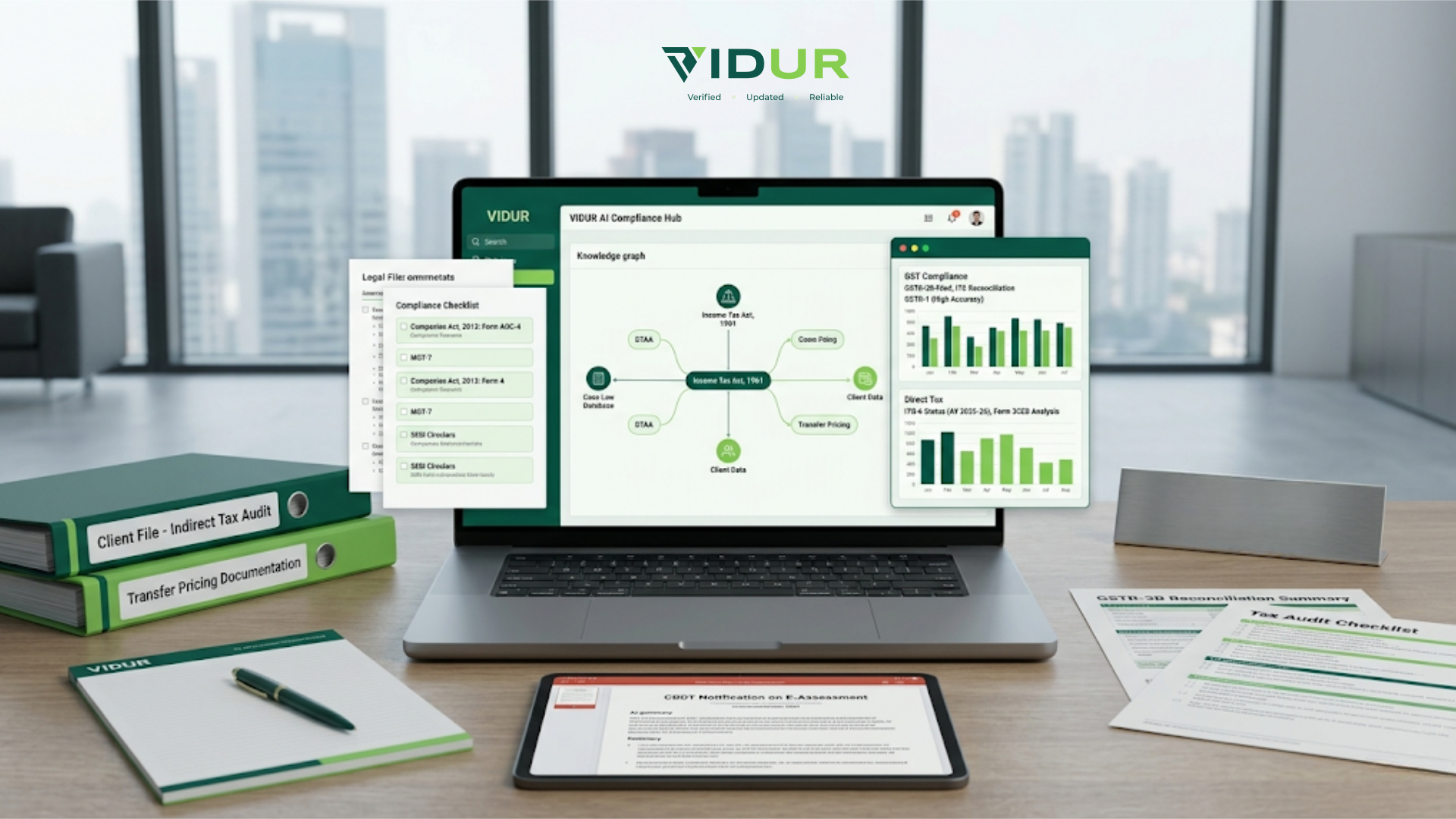
VIDUR publicly positions itself as an AI agent for tax, corporate, regulatory research and drafting. It is built for professionals handling Income Tax, GST, Companies Act, Insolvency, FEMA, SEBI, Accounting Standards, and Audit-related work, and it provides verifiable references and an extensive prompt library.
More specifically, VIDUR AI supports tax research, GST and Income Tax drafting, advisory work, and daily updates. The real value of AI for CA firms is not speed alone. It is dependable speed within a professional context.
Conclusion
The rise of AI in CA firms is not about replacing professional expertise. It is about supporting it. In 2026, the volume of compliance work, legal changes, drafting pressure, and client expectations has made manual-only workflows harder to sustain. Firms that adopt the right AI tools can reduce research time, speed up drafting, improve consistency, and stay more current without losing professional control.
VIDUR AI fits naturally into this shift. It is publicly positioned for CAs, tax professionals, and legal/compliance teams, with support across research, drafting, advisory, and updates in Income Tax, Indirect Tax, Corporate Law, and regulatory subjects.
For CA firms that want to work faster without sounding generic or compromising quality, tools like VIDUR are becoming essential because they solve a real practice problem: turning legal and tax information into usable professional output, quickly and credibly.