


The introduction of the Goods and Services Tax (GST) in India was hailed as a game-changer for simplifying indirect taxation. However, as the dust settled, it became evident that the system, while harmonising many tax rates, introduced its own classification challenges.
One such conundrum that frequently perplexes professionals, restaurateurs, and tax authorities alike is the classification of common Indian foods like parotta, roti, and bread. Is your beloved parotta a ‘bread’ attracting a lower tax rate, or does it fall under a different category altogether?
Let’s untangle this classification maze and understand why such a simple question leads to complex tax implications.
Why Classification Matters in GST
GST is a destination-based tax system, and every item or service is classified under specific Harmonised System of Nomenclature (HSN) codes. These codes determine the applicable tax rate, which can vary widely.
For food items, the GST rate can swing between 0% to 18%, making accurate classification crucial for businesses to remain compliant and competitive.
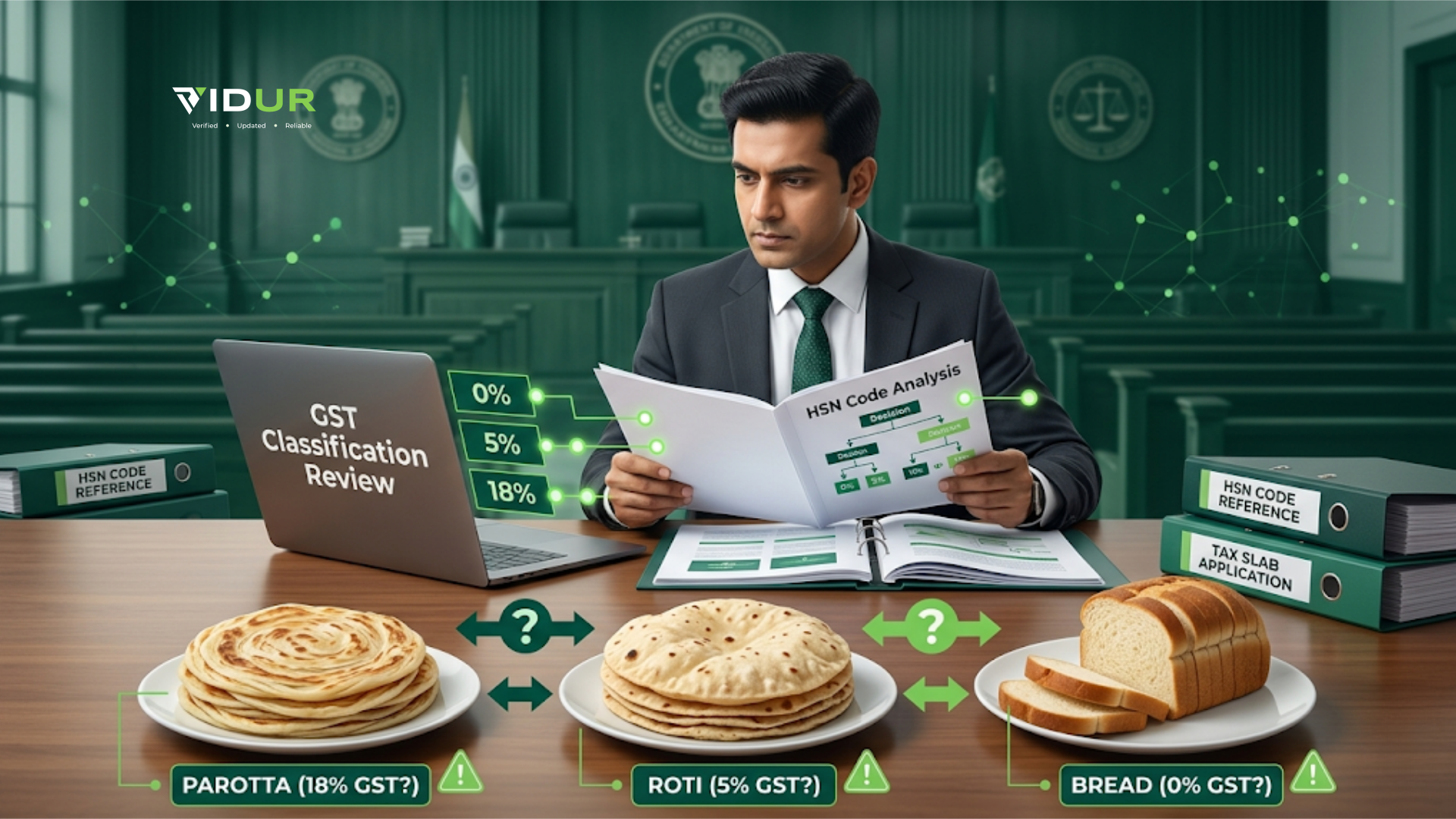
The Bread, Roti, and Parotta Predicament!
In India, bread, roti, and parotta are staple foods, but their preparation and consumption differ vastly across regions.
The GST Council, in its notifications, has distinguished between:
- ‘bread’ (exempt from GST)
- ‘roti’ (generally taxed at 5%)
- ‘parotta’ (sometimes taxed at 18%)
This difference is not just academic; it directly impacts the price at which these items are sold and, consequently, the consumer’s pocket.
The Anatomy of a Parotta versus Roti and Bread
Bread is typically understood as a baked food made primarily from flour and water, commonly leavened with yeast.
Roti, on the other hand, is an unleavened flatbread, usually cooked on a tawa (griddle).
Parotta, popular in South India, is made from maida (refined wheat flour), layered with oil or ghee, and cooked on a griddle, making it distinct in texture and taste. The preparation involves kneading, layering, and pan-frying, resulting in a flaky, soft bread.
The GST authorities, in several advance rulings, have held that parotta, because it is not ready-to-eat and requires further cooking, does not qualify as ‘bread’. Instead, it is classified under the category of ‘unbranded or branded products’, often attracting an 18% GST rate. In contrast, breads are treated as essential, and thus, exempt from GST.
Key GST Notifications and Rulings
The confusion reached a crescendo with the 2020 ruling by the Authority for Advance Rulings (AAR) in the case of Kottaram Agro Foods, which categorically stated that frozen parottas attract 18% GST, while plain and whole wheat bread remain GST-free.
The rationale was that bread is ready for consumption, while parotta requires heating or further preparation. This ruling sent ripples through the hospitality industry, especially in South India, where parotta is a staple.
Similarly, rotis, chapatis, and khakhras—being unleavened and ready-to-eat—are generally taxed at 5%. However, if these items are branded and sold in unit containers, the GST rate may change.
The challenge lies in the nuances:
- Is the item branded?
- Is it packaged?
- Is it ready-to-eat?
Each variable shifts the applicable GST slab.
Implications for Businesses and Consumers
This classification puzzle creates significant compliance challenges for restaurants, hotels, and packaged food manufacturers.
Businesses must meticulously study GST notifications, frequently seek advance rulings, and ensure their product labelling and descriptions match the correct HSN codes. A misclassification can lead to underpayment or overpayment of tax, penalties, and even litigation.
For consumers, the effect is immediate. An 18% GST on parotta compared to 0% on bread can make the former substantially more expensive.
This can also promote tax arbitrage, where manufacturers and sellers may try to ‘fit’ their products into lower tax brackets through slight modifications or clever marketing.
Why Does the Confusion Persist?
The root of the confusion is twofold:
- India’s incredible culinary diversity
- The lack of universally accepted definitions for everyday foods
What is called parotta in Tamil Nadu may be labelled as ‘Malabar paratha’ elsewhere. Preparation styles, ingredients, and regional terminologies further muddy the waters.
The GST law, while comprehensive, cannot possibly cover every regional dish in detail.
The Way Forward: Need for Clarity
Experts suggest that the GST Council and tax authorities issue more unified, clear-cut guidelines, perhaps leveraging food standards or culinary definitions set by bodies like FSSAI.
Periodic reviews and stakeholder consultations can help ensure that tax rates remain fair and consistent, minimising confusion for both small businesses and large food chains.
For now, the best approach for businesses is to:
- Seek professional advice
- Stay updated on AAR decisions
- Maintain transparent documentation
As India’s food landscape continues to evolve, so too must its tax laws, ensuring that the classification maze eventually becomes a thing of the past.
Conclusion
The GST classification debate—whether your parotta is a roti or bread—might seem trivial at first glance, but it is emblematic of the wider challenges faced in implementing a uniform tax system in a diverse country like India.
Until definitions are clarified and interpretations standardised, both businesses and consumers must carefully navigate this maze, balancing compliance with culinary tradition.