


“One of our clients, a mid-sized manufacturer, is being asked for Ind AS compliant financials by their bank for a new credit line,” a senior partner at a CA firm noted. “I thought these standards were only for the large size listed companies. How are we supposed to handle this?”
A younger associate replied, “That’s the point, sir. The Ind AS wave is no longer just hitting the shore; it’s moving inland. Even if our clients don’t meet the mandatory net worth thresholds, the ecosystem they operate in—their lenders, investors, and parent companies—is pulling them into the Ind AS framework.”
Since its phased implementation began, Indian Accounting Standards (Ind AS) have been perceived by many Small and Medium Practitioners (SMPs) as a distant reality, relevant only to the large corporations. However, this perception is rapidly changing. The influence of Ind AS is expanding, creating both challenges and significant opportunities for SMPs.
Here are four key reasons why Ind AS is now every practitioner’s business.
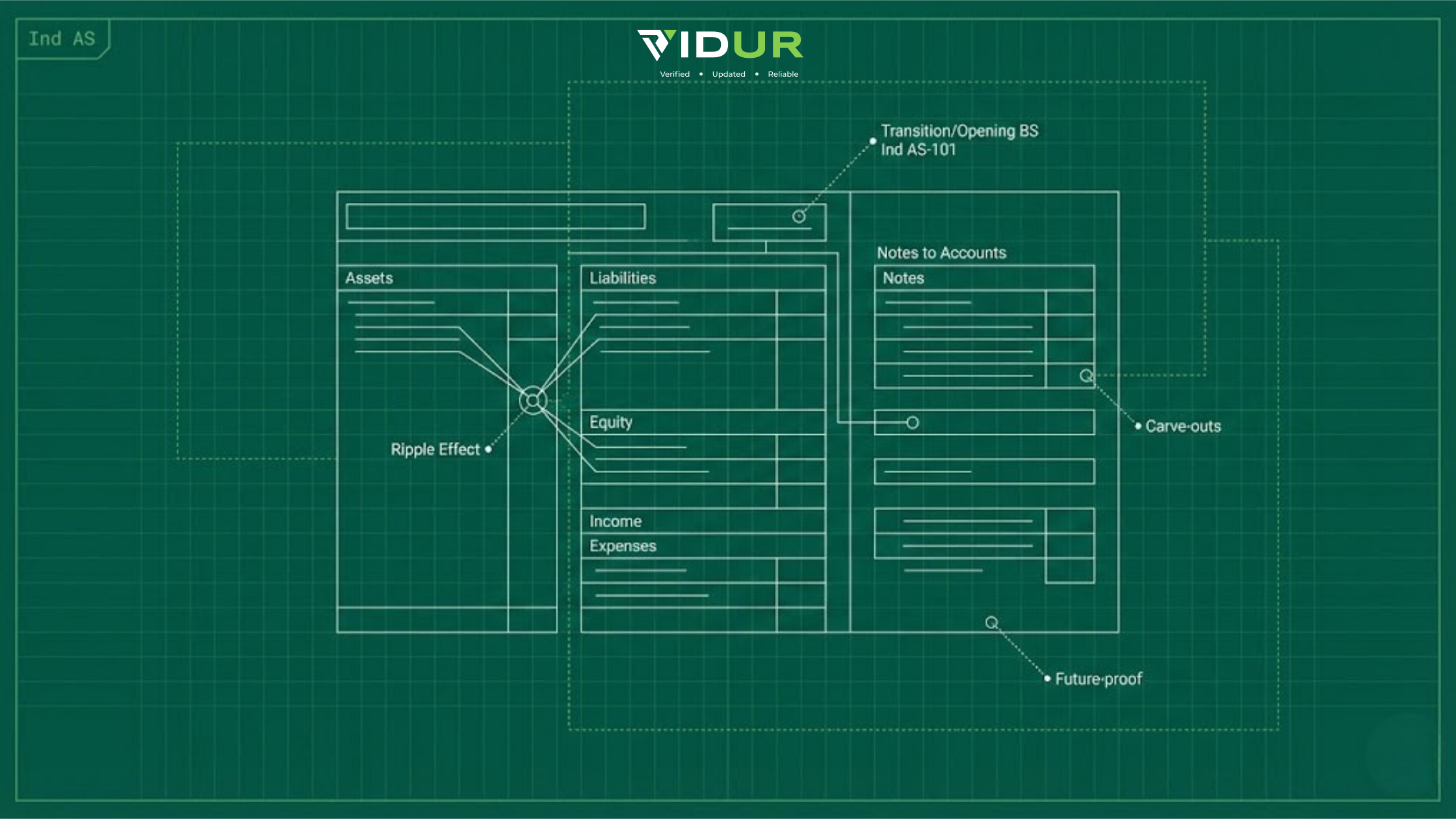
1. The Ripple Effect: Your Clients Are Being Pulled In
The most direct way Ind AS is impacting SMPs is through their client base. You may not be auditing a Nifty 50 company, but you might be handling the books for its subsidiary, associate, or joint venture. These entities are required to provide Ind AS-compliant data for group consolidation. Furthermore, as ambitious mid-sized companies seek private equity funding, plan for IPOs, or engage with global partners, they are voluntarily adopting Ind AS to enhance comparability and attract investment. The mandatory thresholds are just the starting point; the market itself is demanding broader adoption.
2. The Transition Challenge: A Major Advisory Opportunity
The first-time adoption of Ind AS is a complex and demanding process governed by Ind AS-101. This isn’t just an accounting exercise; it requires a fundamental shift in how a company’s financial position and performance are measured and presented. For SMPs, this complexity represents a significant advisory opportunity. Guiding a company through its transition is a high-value service that goes far beyond routine compliance.
Key Steps in First-Time Ind AS Adoption (Ind AS-101)
- Determine the Date of Transition: The start of the earliest period for which full comparative Ind AS information is presented.
- Prepare an Opening Ind AS Balance Sheet: Retrospectively apply to all Ind AS standards as if they had always been in use. This involves recognizing, derecognizing, and reclassifying assets and liabilities.
- Apply Mandatory Exceptions & Optional Exemptions: Use specific carve-outs provided in the standard to deal with practical challenges where full retrospective application is not feasible (e.g., for business combinations).
- Provide Detailed Reconciliations: Prepare and disclose extensive reconciliations explaining the differences in equity and total comprehensive income between the previous accounting framework (Indian GAAP) and Ind AS.
Mastering this process positions an SMP as a strategic advisor, not just an accountant.
3. Understanding the ‘Why’: India’s Unique Path to Convergence
Practitioners often ask, “Why didn’t India just adopt IFRS directly?” The answer lies in the principle of convergence, not adoption. India chose to align Ind AS closely with IFRS while creating specific “carve-outs” to suit the country’s unique legal, regulatory, and economic environment.
For example, while IFRS allows a fair value model for investment property, Ind AS mandates a cost-based model, reflecting the view that Indian property markets may not be mature enough for reliable fair value determination. Understanding these nuances is crucial for applying the standards correctly and explaining them to clients.
4. Future-Proofing Your Practice
Expertise in Ind AS is no longer a niche skill; it is a strategic necessity for the growth and sustainability of any modern practice. As the remaining major sectors, like banking and insurance, eventually transition to Ind AS, the demand for knowledgeable practitioners will only increase. Building this capability now allows SMPs to:
- Compete Effectively: Offer specialized services that were once the domain of larger firms.
- Enhance Credibility: Strengthen the firm’s technical depth and market reputation.
- Drive Growth: Tap into new revenue streams from transition advisory, valuation services, and complex accounting support.
Investing in Ind AS training, building specialized teams, and leveraging technology are no longer optional; they are essential steps for any SMP looking to thrive in the evolving financial landscape.