

“I’ve just received the audit plan, and it looks very different this year,” said the Group CFO, pointing to a section on risk assessment for their smaller overseas subsidiaries. “Previously, you only focused on our major components. Why the change?”
The group auditor responded, “You’re right. The standards have evolved. We’re moving from a size-based checklist to a dynamic, risk-based approach. Our responsibility is no longer just to consolidate reports, but to actively oversee the entire group audit process, regardless of a subsidiary’s size. It’s about identifying and addressing risk wherever it exists.”
This scenario is becoming increasingly common as global and Indian auditing standards adapt to the complexity of modern corporate structures. The revision of International Standard on Auditing (ISA) 600, which deals with group audits, marks a fundamental shift in methodology. For CAs and tax lawyers advising large corporate groups, understanding these changes is crucial. Here are the four pillars of this new approach.
1. The End of the Size-Based Approach
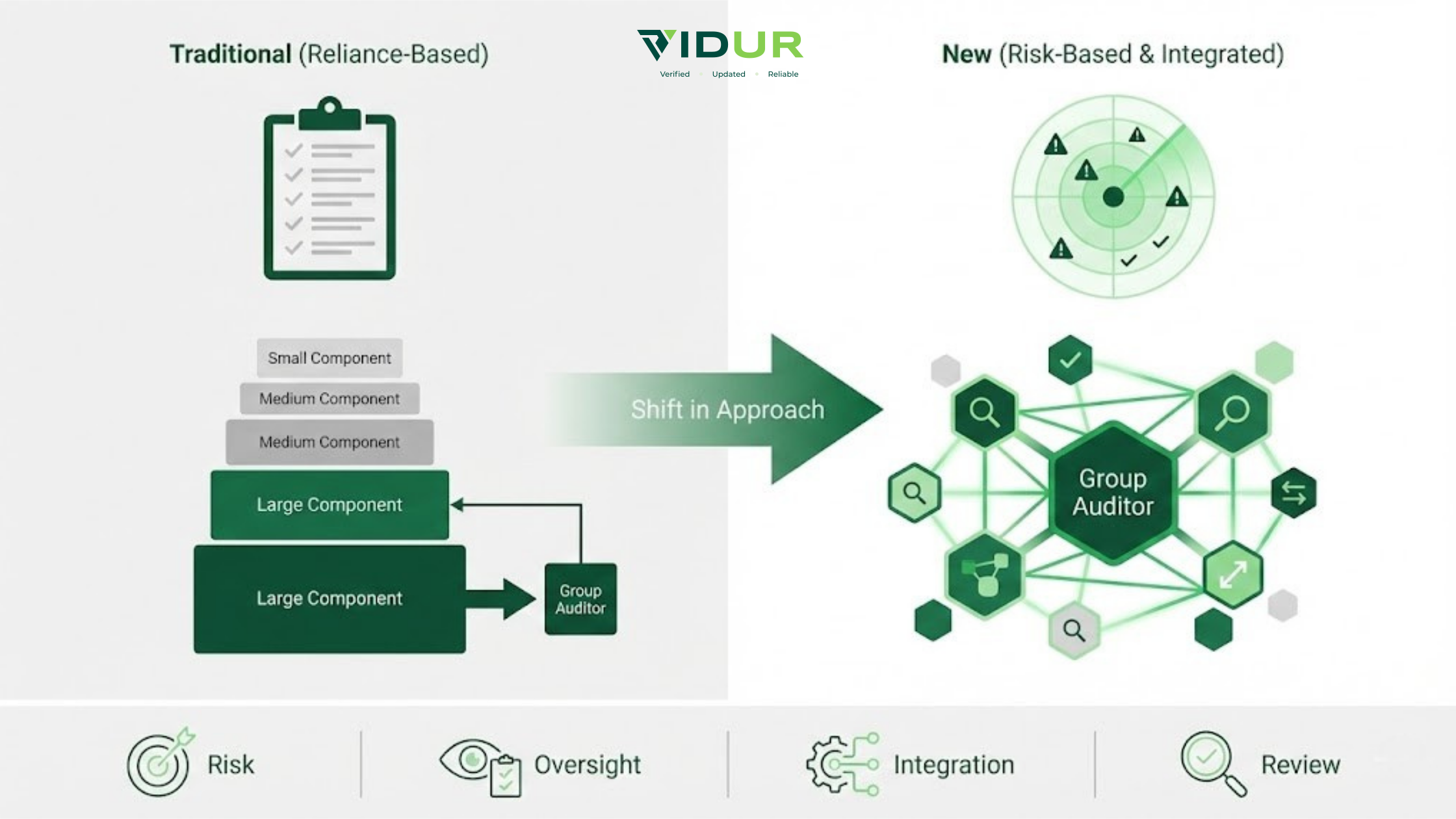
Traditionally, group audits focused heavily on “significant components”—subsidiaries that were material to the group based on size thresholds (e.g., revenue or assets). The revised standard moves away from this rigid classification to a more intelligent, risk-based approach. The primary question is no longer “Is it big?” but “Does it pose a material risk?” This requires the group auditor to develop a holistic understanding of the entire group and its environment, identifying risks of material misstatement at both the group and component levels, regardless of a component’s financial footprint.
2. Active Oversight, Not Passive Reliance
The new standard significantly raises the bar for the group auditor’s involvement with component auditors. The era of simply “using the work of another auditor” is over. The group auditor is now explicitly responsible for directing, supervising, and reviewing. This includes:
- Assessing Competence: Evaluating professional competence, experience, and independence.
- Ensuring Access: Confirming the ability to review the documentation and communicate freely.
- Providing Clear Direction: Issuing detailed instructions on scope, materiality, and identified risks.
This shift demands a proactive, hands-on approach to ensure the quality and consistency of the audit across the entire group.
3. A New Framework for Engagement
ISA 600 (Revised) introduces a more structured and collaborative framework for group audits, moving away from siloed efforts. This change is best understood by comparing the old and new paradigms.
Traditional vs New Paradigm: Group Audits Under ISA 600 (Revised)
| Aspect | Traditional Approach (Reliance-Based) | New Approach (Risk-Based & Integrated) |
|---|---|---|
| Component Selection | Primarily based on financial significance (size). | Based on identified risks of material misstatement. |
| Group Auditor Role | Relied on the report of the component auditor. | Actively directs, supervises, and reviews component auditor’s work. |
| Communication | Often formal and limited to year-end reporting. | Continuous, two-way communication throughout the audit process. |
| Documentation | Focused on justifying reliance. | Focused on demonstrating active oversight and risk mitigation. |
This integrated model ensures that the group engagement partner has sufficient and appropriate evidence to form an opinion on the financial statements as a whole.
4. Rigorous Review and Professional Skepticism
A cornerstone of the revised standard is the group auditor’s responsibility to thoroughly evaluate the work performed by component auditors. This is not a checklist exercise but a dynamic process requiring professional judgment and skepticism. The group auditor must review key audit documentation, especially in high-risk areas, and discuss any significant findings or unresolved matters directly with the component auditor. All misstatements identified at the component level must be aggregated to assess their overall impact on the group financial statements, ensuring that the final audit opinion is built on a foundation of robust and verified evidence.
The Future of Group Audits
The principles outlined in ISA 600 (Revised) are setting a new global benchmark, and with Indian standards (SA 600) also undergoing revision, this risk-based, integrated approach is the future of group audits. It demands a more analytical mindset from auditors and greater transparency from companies. For professional advisors, it underscores the importance of guiding clients through a more intensive but ultimately more reliable audit process, strengthening trust in an interconnected business world.
Ready to navigate the complexities of modern legal and financial compliance with confidence? Discover how VIDUR AI can empower your practice with intelligent, AI-driven insights. Visit us today to learn more.