

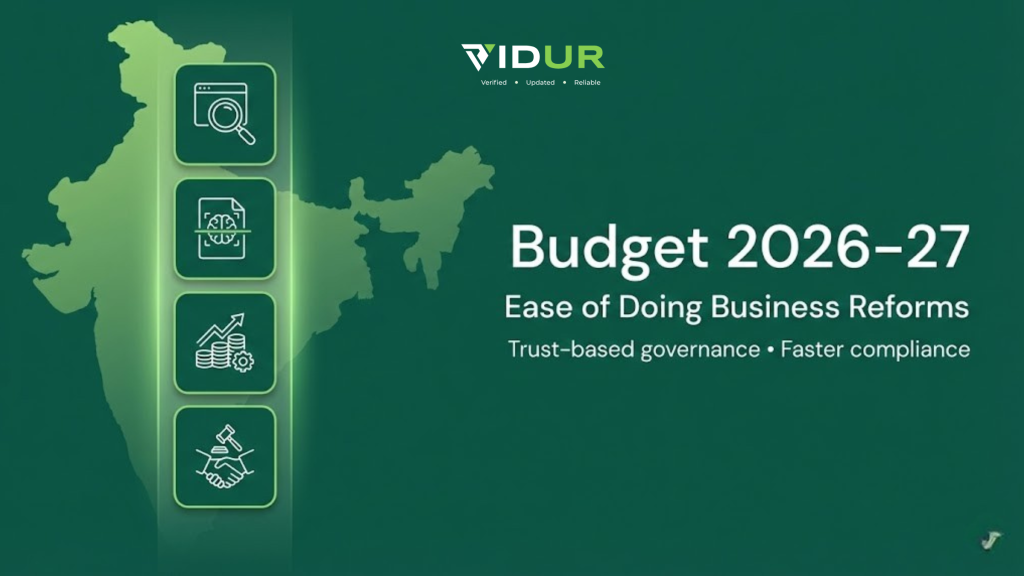
The Union Budget 2026-27 marks a significant philosophical shift, prioritizing the “Ease of Doing Business” for entrepreneurs. The government is signaling a move from scrutiny to trust, rolling out a red carpet of opportunity rather than more red tape. This creates a favorable environment for businesses to thrive.
A Broad-Based Push for Business Efficiency
This year’s budget goes beyond simple tax adjustments, introducing a comprehensive suite of reforms aimed at making the entire business lifecycle smoother. The focus is on tangible, operational improvements that reduce friction and boost competitiveness. From international trade to domestic compliance, the changes are designed to reward compliant businesses with efficiency.
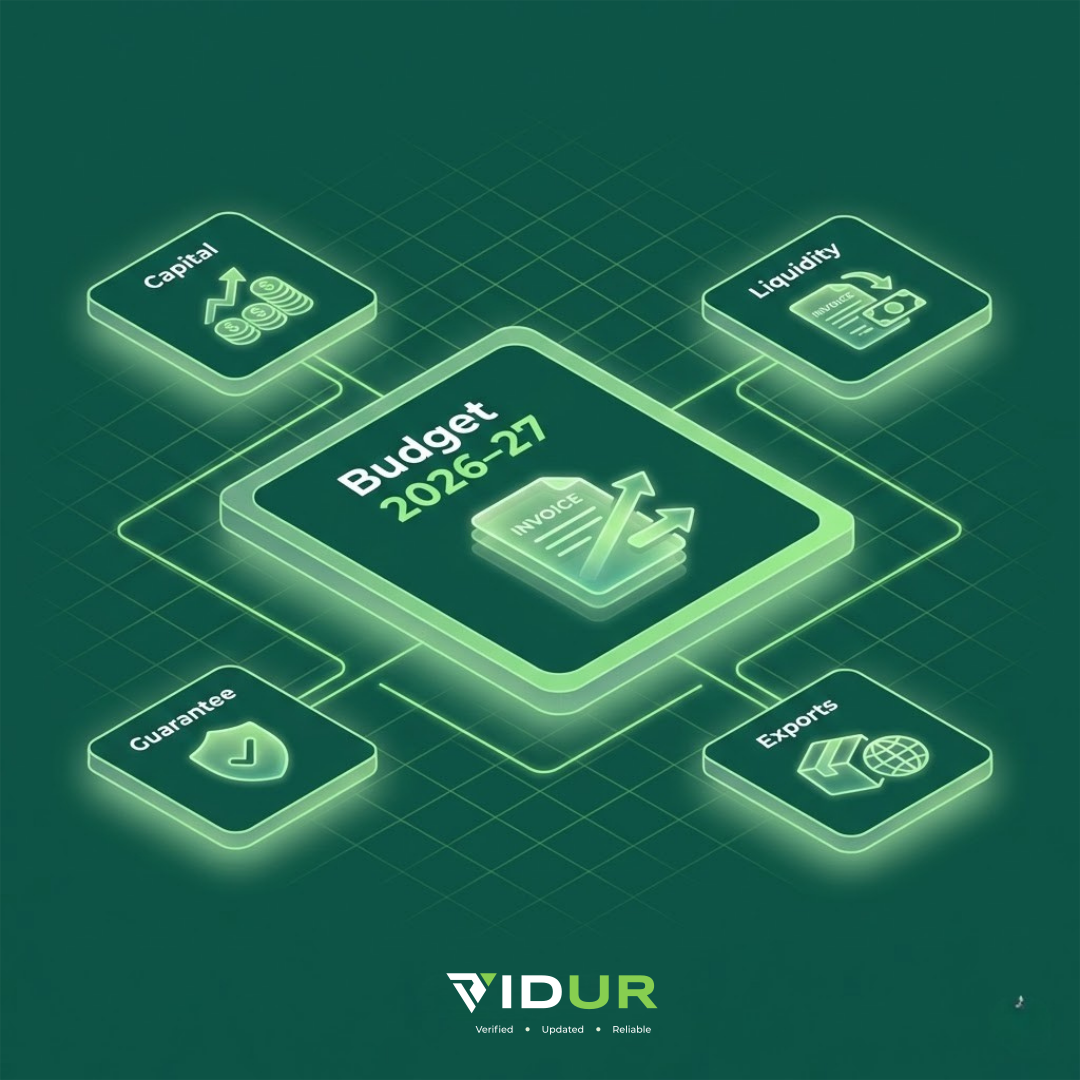
For instance, the push to strengthen the Trade Receivables Discounting System (TReDS) by mandating it for all MSME purchases by Central Public Sector Enterprises is a game-changer for SME liquidity. This, combined with linking GeM to TReDS, will provide financiers with better information, leading to cheaper and faster financing for small businesses. The government is even facilitating the creation of ‘Corporate Mitras’—accredited para-professionals—to help MSMEs in Tier-II and Tier-III towns meet compliance requirements at affordable costs.
Key Reforms at a Glance
To truly appreciate the breadth of these changes, it’s helpful to see them laid out. The reforms touch upon everything from customs and international investment to dispute resolution:
| Area of Reform | Specific Change | Direct Benefit for Businesses |
|---|---|---|
| Foreign Investment | PROI investment limit in listed companies via PIS increased from 5% to 10% (overall limit 24%). | Increased access to foreign capital and deeper, more liquid markets. |
| Customs & Logistics | A single, interconnected digital window (Customs Integrated System – CIS) to be rolled out over 2 years. | Streamlined cargo clearance, reduced paperwork, and faster turnaround times at ports. |
| Dispute Resolution | Honest taxpayers can settle disputes by paying an additional amount in lieu of penalty. | Faster, more predictable dispute resolution without the risk of protracted litigation. |
| Trade Facilitation | Non-intrusive, AI-powered scanning for container risk assessment at major ports. | Reduced physical inspections and delays, leading to smoother supply chains. |
| TDS/TCS Rationalization | Flat 2% TCS on overseas tour packages and LRS for education/medical; automated nil-deduction process. | Simplified calculations, reduced compliance burden, and improved cash flow management. |
| Fisheries Sector | Fish caught by Indian vessels in the Exclusive Economic Zone (EEZ) and High Seas is now duty-free. | Enhanced competitiveness and profitability for the Indian fishing and seafood export industry. |
A New Era of Trust-Based Governance
Beyond these specific measures, the most significant shift is the emphasis on ‘Trust-Based Governance.’ This isn’t just a slogan; it’s backed by policy. The extension of the duty-deferral period for Authorized Economic Operators (AEOs) from 15 to 30 days directly boosts cash flow. The validity of advance rulings is being extended from three to five years, providing much-needed certainty for long-term planning.
This trust-based model is about empowering businesses. By transforming the customs warehousing framework into a self-declaration, operator-centric system, the government is signaling its confidence in compliant enterprises to manage their own affairs efficiently.
The Biggest Leap: A Simplified Future
And finally, the new Income Tax Act, 2025. While a new Act sounds daunting, its core purpose is simplification. The introduction of simplified rules and forms is designed to make compliance more intuitive. It represents a foundational step towards a more predictable and straightforward tax environment.
As we navigate these changes, the role of a professional advisor is also evolving. It’s no longer just about ensuring compliance; it’s about leveraging these new, business-friendly reforms to create a strategic advantage. The sheer volume of these positive changes means that the practices that can quickly adapt and integrate these reforms into their client advisory will be the ones that thrive. The key is not just knowing the rules, but having the tools to implement them efficiently, turning this new era of simplified compliance and improved “ease of doing business” into a tangible competitive edge for the businesses we guide.