


– The Valuation Dilemma
“Our balance sheet says the factory land is valued at what we paid for it ten years ago, but the market price has tripled!” exclaimed a perplexed CEO during a board meeting. “How does that give our investors a true picture?”
His Chartered Accountant replied, “You’ve hit on the central debate in modern accounting: the tension between fair value and historical cost. While cost gives us reliability, fair value offers relevance. Under Ind AS, we navigate a world that uses both, and the key is understanding why and when.”
This conversation is happening in boardrooms across India. The shift to Ind AS has moved the long-standing academic debate between historical cost and fair value into a practical, strategic challenge. For tax professionals, advising clients effectively means mastering the nuances of this mixed-measurement world.
Here are four key realities to consider.
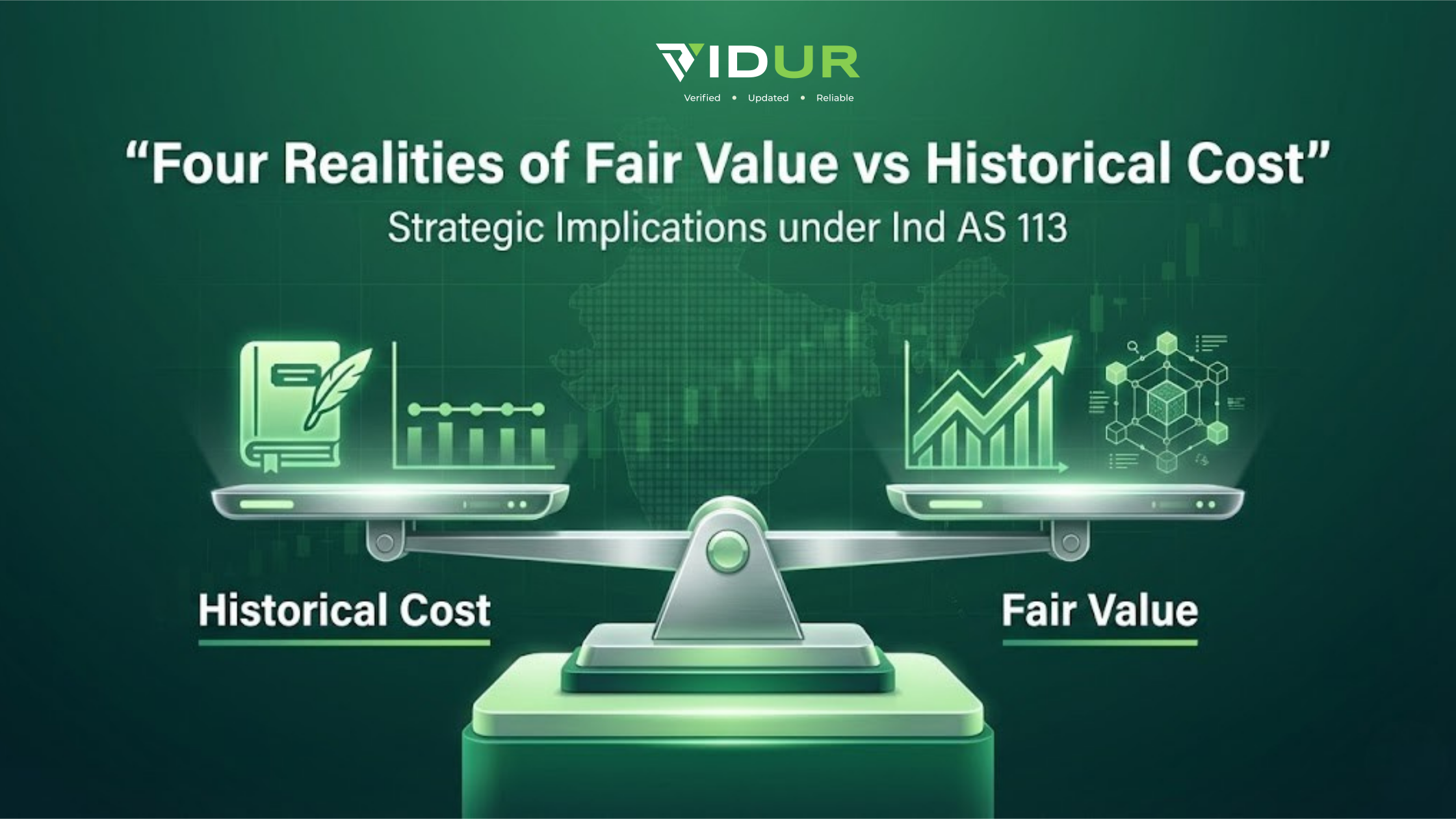
1. Historical Cost: The Anchor of Reliability
Historical cost has long been the bedrock of accounting for good reason. It is objective, verifiable, and less prone to manipulation. Assets are recorded at their purchase price, providing a stable and consistent basis for financial reporting that lenders and regulators appreciate.
However, in a dynamic economy, its relevance can fade, potentially undervaluing assets and obscuring a company’s true economic position.
2. The Fair Value Shift: A Move Towards Market Reality
Indian Accounting Standard 113 introduced a fundamental change, defining fair value as an “exit price”—the price received to sell an asset in an orderly market transaction.
This market-based perspective aims to provide more relevant, forward-looking information. To bring discipline to this approach, Ind AS 113 established a three-level hierarchy for valuation inputs.
Fair Value Hierarchy
| Level | Description | Example |
|---|---|---|
| Level 1 | Unadjusted quoted prices in active markets for identical assets. | Shares traded on the NSE/BSE. |
| Level 2 | Observable inputs other than quoted prices (e.g., for similar assets). | Valuing a corporate bond based on prevailing interest rates. |
| Level 3 | Unobservable inputs based on the entity’s own assumptions. | Valuing a private equity investment using a discounted cash flow model. |
While Level 1 provides the most reliability, Level 3 valuations require significant judgment and robust governance, making them a key focus area for auditors and regulators.
3. The Hybrid Balance Sheet: A Mix of Old and New
In practice, no company operates on a pure fair value or historical cost basis. The result is a “mixed measurement” model.
While financial instruments and equity investments are now mandatorily measured at fair value, many significant asset classes remain on the historical cost basis.
Property, Plant, and Equipment (PPE) and inventories are prime examples. The cost model for PPE is still the market practice in India, and inventories are held at the lower of cost or net realizable value to avoid recognizing profits before a sale.
This hybrid approach creates complexity and requires careful explanation to stakeholders.
4. Beyond Compliance: Disclosure as a Governance Tool
The extensive disclosure requirements under Ind AS 113 are more than just a compliance exercise; they are a powerful governance mechanism.
These disclosures force organizations to be transparent about their valuation techniques, the judgments made (especially for Level 3), and the potential impact of measurement uncertainty.
For CAs and audit committees, these disclosures provide a structured framework to challenge management’s estimates and assess the quality of the underlying valuations.
The focus is shifting from merely debating accounting policy to ensuring the governance around valuation is sound, independent, and well-documented.
Strategic Implications for Modern Advisors
The choice between historical cost and fair value is no longer just a technical accounting decision; it’s a strategic one.
It impacts how performance is measured, how risk is perceived, and ultimately, how a company is valued.
As an advisor, the crucial role is to help clients navigate this complexity, ensuring their accounting policies faithfully reflect their business model and that their valuation governance is robust enough to withstand scrutiny.
Ready to navigate the complexities of modern legal and financial compliance with confidence?
Discover how VIDUR AI can empower your practice with intelligent, AI-driven insights. Visit us today to learn more and request a demo.